
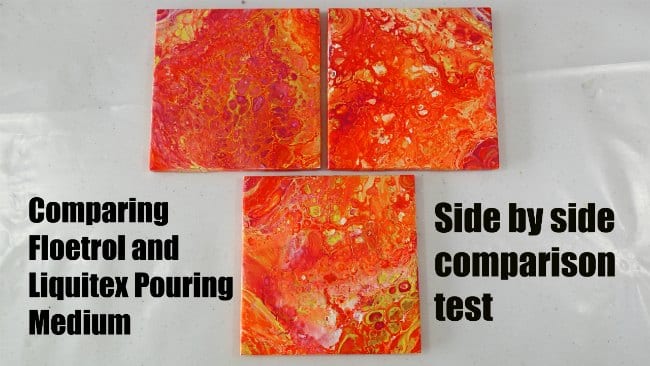
At last, I got my hands on the gold standard pouring medium for acrylic pouring and swiping – the Liquitex Pouring Medium also known as gloss medium for the apparent gloss it offers. Since our style of painting has become really popular this has been sold out or very low in stock in a lot of places. I can’t buy it here on the island so I ordered some via the Acrylic Pouring Store and had it shipped in. Now let’s test how good this is!
The Test
I decided on a three-part test. As follows:
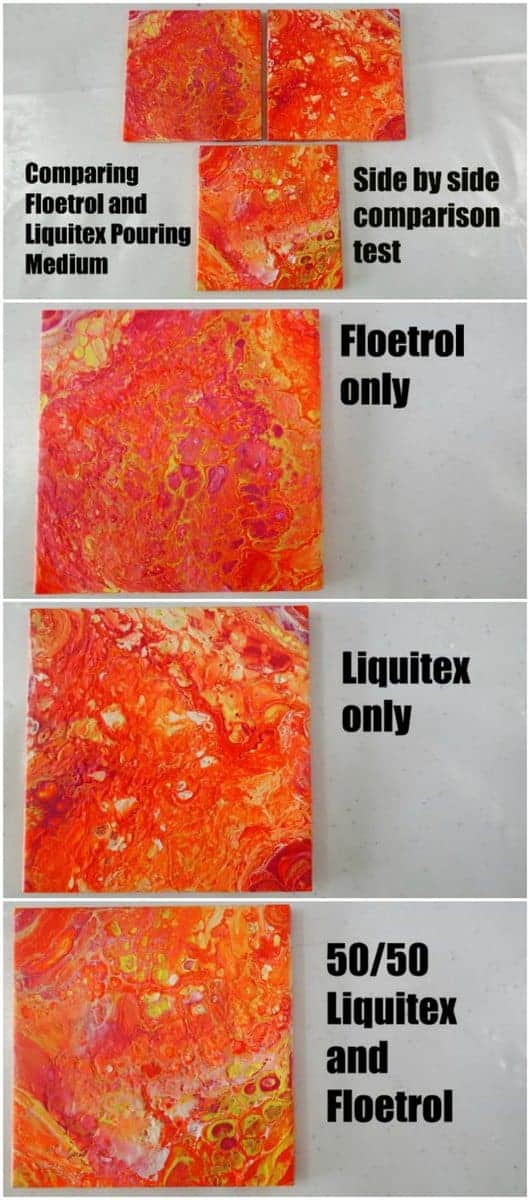
- My usual ‘recipe’ with paint, Floetrol, water and liquid silicone
- Replace the Floetrol with an equal part of the Liquitex instead
- A mix of half and half Floetrol and Liquitex pouring medium
I used the same acrylic paints in the same colors and mixed up three batches with the recipes above. It was basically 1 tablespoon of acrylic paint, to a half tablespoon of either the Floetrol or the Liquitex pouring medium (or the 50/50 mix of each), plus about a teaspoon of water, as needed to get the desired paint consistency. Each pot of acrylic paint had 4-5 drops of the Treadmill lubricant silicone oil. Then I made up 3 generous acrylic paint flip cups and gave it a trial. Here are my results of the side-by-side test of the pouring mediums in the video below.
So OK my color choices were bad. I was looking for something bright and cheerful for my acrylic pour and it was a bit of an eyesore in the end, but still, the experiment was useful.
So OK my colors choices were bad. I was looking for something bright and cheerful and it was a bit of an eyesore in the end, but still, the experiment was useful.
The Results
- No immediate difference was seen or felt during paint mixing. The paints all mixed the same and made the same volume to get the right paint consistency so no one method stood out as needing more or less water than the others barring a few drops here and there.
- The pour – all poured the same and tilted the same on the tile. No difference was seen.
- Cells – the 100% Floetrol seemed to create cells that were better looking. There were fewer large cells in the 100% Liquitex and the 50/50 mix did have cells, but they seemed to break up and go feathery where the paints seemed to mix.
- Drying – they all took the same amount of time to dry.
- Dry appearance – well, ugly, but apart from that, there was slightly more gloss to the Liquitex, however both tests with the liquitex pouring medium had holes and cracks in the paint, something I had never had before when only using Floetrol.
Overall thoughts – this was only a single test so it’s hard to draw a solid conclusion. The Liquitex didn’t stand out as creating better cells either wet or dry or in the 50/50 mix. But the cracks and holes in the paint were new to me, and at this point, I can only assume they were a result of using the Liquitex. More testing to come on that – swipes next!
Read Floetrol vs Liquitex Test – Part 2
For more free tips and guides on acrylic pouring check out our guides below:
Complete Acrylic Pouring Technique Guide
How To: Your First Acrylic Pour
Top Acrylic Pouring Beginners Tips


After being told in high school that she was so bad at art that she should switch to another subject, Deby didn’t paint again for 35 years. Then a stroke released a new wave of creativity and she began exploring with dot painting, abstract and eventually acrylic pouring, and at last the joy of working with color returned. You don’t need ‘talent’ to be an acrylic pouring artist – just enthusiasm, some basic instruction, and a willingness to try, fail and try again. Paint along with her and learn from her many mistakes, and you’ll soon make great art together.