
There are a lot of interesting things you can pour on. Even within our group, I’m constantly seeing new and awesome ways to enhance everyday lives with pouring art!
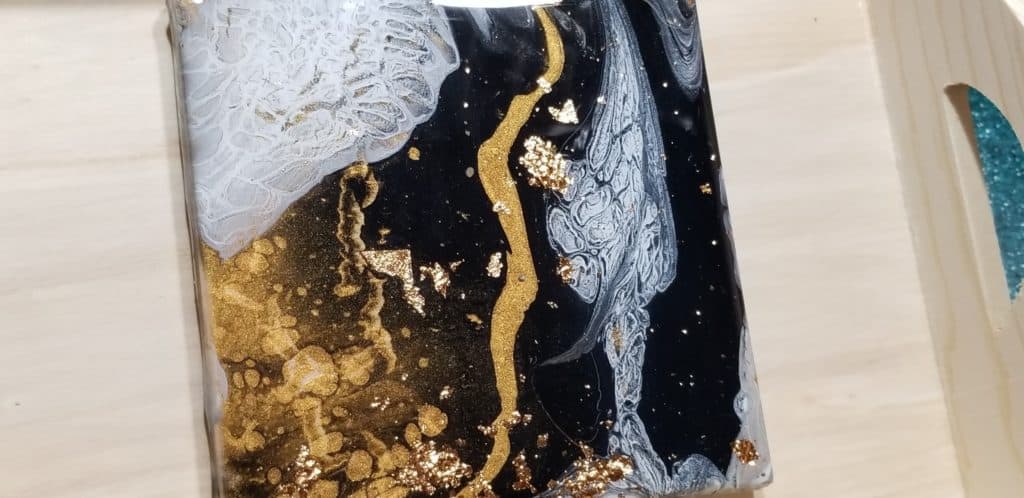
I’ve recently started making faux marble coasters and they have been selling like crazy! I initially made them so that I could have my own set, but five months after I began making them, I still have yet to keep a single set.
Supplies I Used:
-
- 4×4 ceramic tiles
- Floetrol or your preferred medium
- Acrylic paints
- Stirring sticks
- Plastic cups for stirring and propping
- Pre-cut 4×4 cork pieces
- Foam craft brush
- Plastic gloves
- Pro Marine Supplies resin
Let’s Get Started!
Before you begin, make sure to lay down protective plastic or wax paper on your work space. Then, over turn four plastic cups and center one 4×4 tile on each to keep it elevated from the work surface.
Prepare your paints. I like to use a combination of grey, white, and gold for my coasters, or black, white and bronze; any color combination works! I’d suggest using two non-metallic colors and one complimentary metallic color to really retain that marble look. For coasters, I typically do one big dirty pour cup; you’ll need at least an ounce of paint total per coaster to make sure that the surface is completely covered. Flip cups also work nicely, if you buy the smaller plastic “shot glass” style cups.
Pour at least an ounce of paint from your dirty pour cup into the middle of your tile. Then, manipulate the tile as you would any other piece to move the paint as desired and cover the edges. Use any extra paint in your dirty pour cup to add extra color or accents.
Allow your tiles to cure until they are completely dry; depending on your environment, this can take anywhere from four to 10 days. If in doubt, wait.
Once the paint on your tiles has completely dried, apply a thin layer of Polycrylic. You can either pour an ounce of Polycrylic into the middle and tilt the tile to spread it over the surface and edges, or use a foam craft brush to spread it. Just be sure to spread it evenly, so you don’t have any streaky areas!
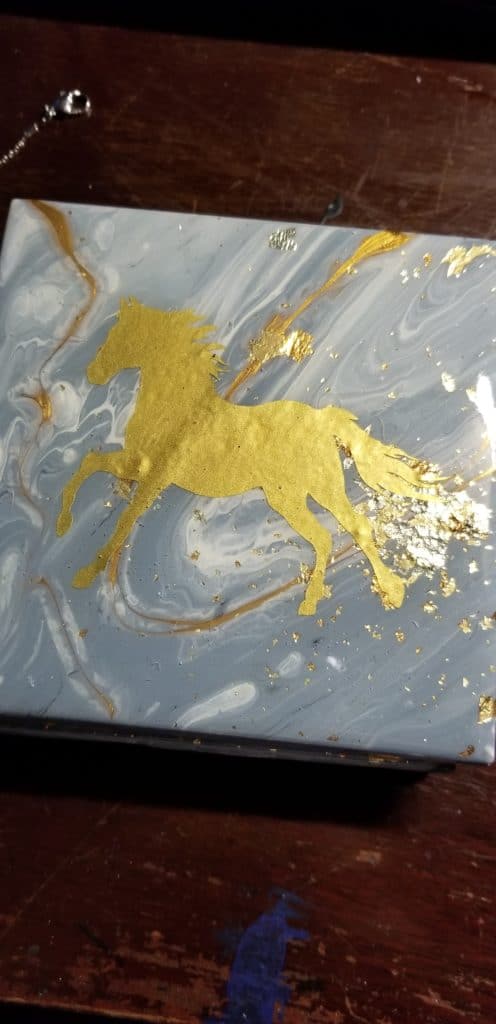
Optional: If you want to add metal leaf to your coasters, now is a good time to do it! I like to take a sheet of metal leaf in gold or silver and crush it in my fingers. Then, I hold my hand about 10 inches above the coasters and sprinkle the metal leaf over them. This random placement gives a great highlight to the piece with just enough aimlessness to look intentional. If you decided to add metal leaf, seal your piece again with Polycrylic. If you did not add metal leaf, go to the next step.
Time for resin! I use Pro Marine Supplies resin, which is a two part resin system. No matter which resin you use, make sure to follow the instructions carefully so that your coasters cure properly.
Once you have mixed your resin, pour approximately one to one and a half ounces in the middle of your tile. Then, using a stirring stick, spread the resin evenly so that it covers each corner and edge.
Use a torch to lightly skim over the surface of each newly resined tile. This will help pop any bubbles present on the surface.
Allow your resin to cure per the company’s instructions. After the resin has set, you can remove any drips by using a Dremel tool, or can avoid excess drips by taping off the back of your tile or scraping the drips away after about two hours of curing.
After your resin has cured completely, place one cork square on the back of each tile and press firmly to adhere. If you have not purchased self-adhesive squares, you can also use double sided tape.
That’s it! Although making tiles is a lengthy process, it is not necessarily complicated if you take your time with each step. Make sure that you follow the drying and curing instructions for each individual step to avoid dips, cracks and pulling in your resin!
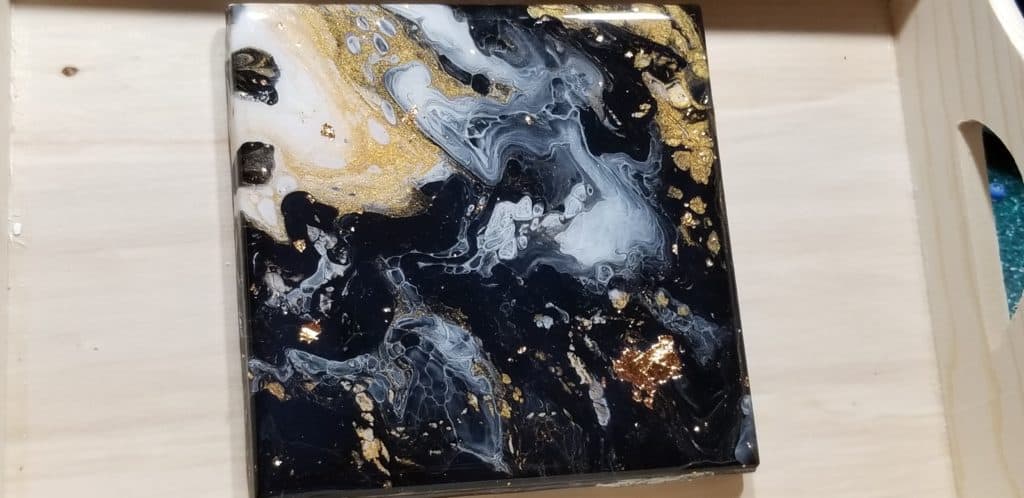
Final Thoughts
If you already have experience with pouring, making coasters is a good way to take your art from beautiful to beautiful and usable! This method also works well for larger tiles that can be used for serving trays or displays. Just remember to check with your resin company for things like heat resistance and food safety.

Sara Wagner is an author and artist from Upstate New York. She is the owner of Studio Blackwater and can typically be found covered in paint, cats, or her two young daughters. You can find her on Facebook and Instagram as @studioblackwater.