
Seriously, you are going to love this. Or maybe you’ll hate it. Depends on whether you are a glitter and sparkle person or not. I love glitter, sparkle, and metallics so anytime I can have the excuse to use them in my pours, I’m a happy lady. Today I’m focusing on pouring, no fancy dirty pours, no puddles, no flip cups, no cells. Just me, a blank canvas and some cups of paint. And glitter – oh yeah, I think I already mentioned the glitter.
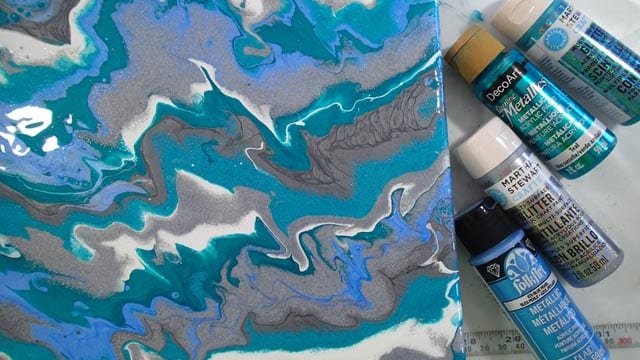
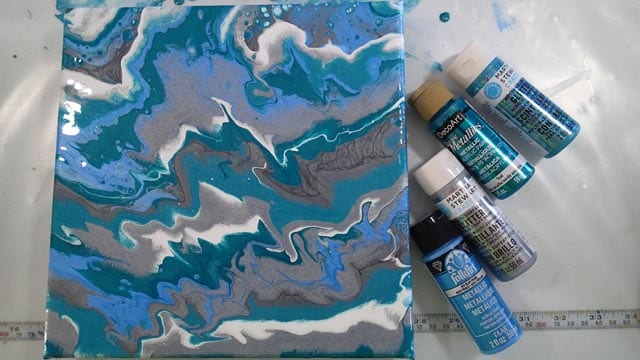
My colors:
- Martha Stewart Glitter paint in Turquoise
- Martha Stewart Glitter paint in Sterling Silver
- Deco Art Metallics in Teal
- Blick Titanium White
- Art Alternatives Silver
- Folk Art Metallic Blue Pearl
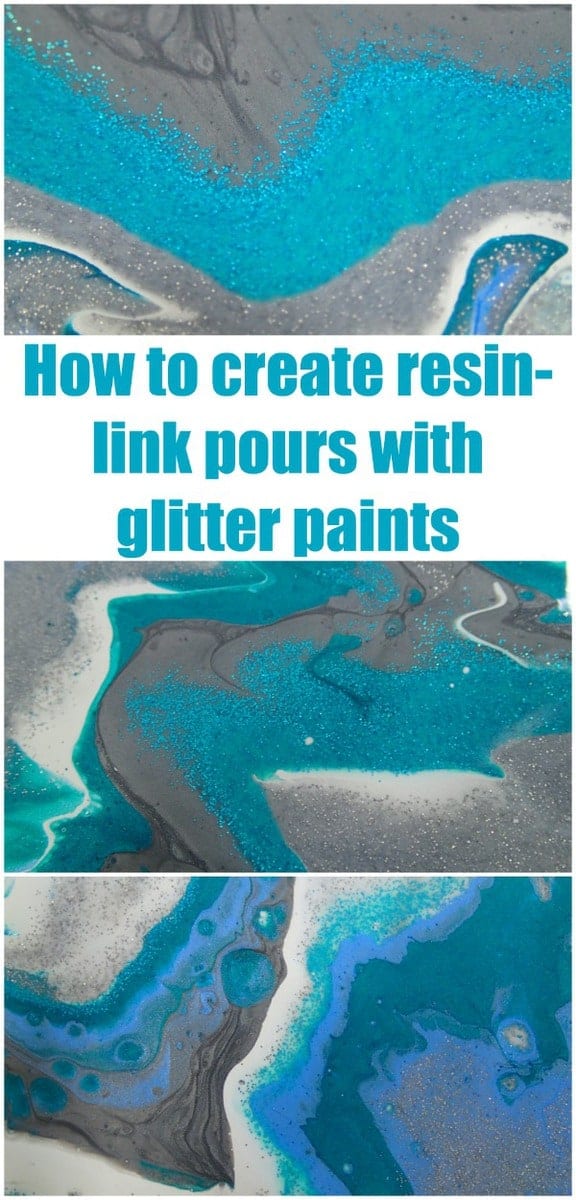
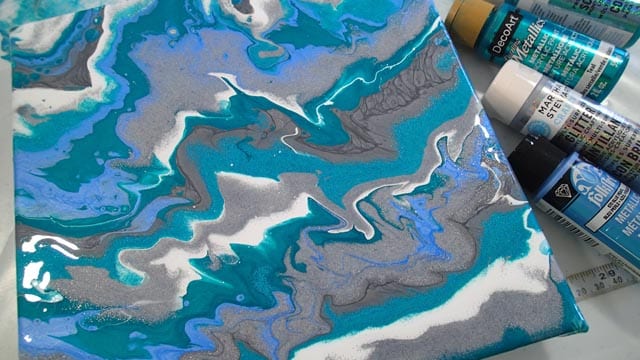
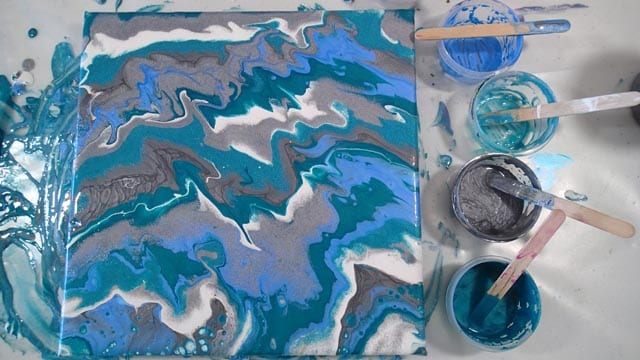
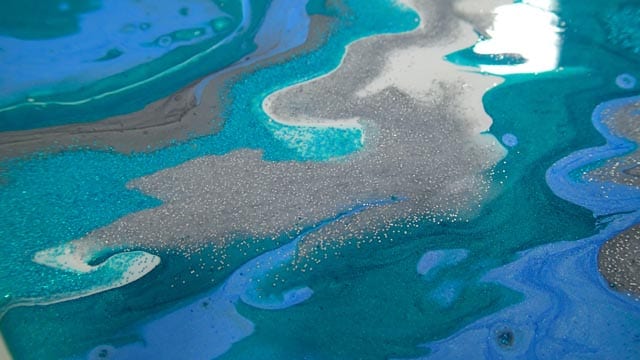
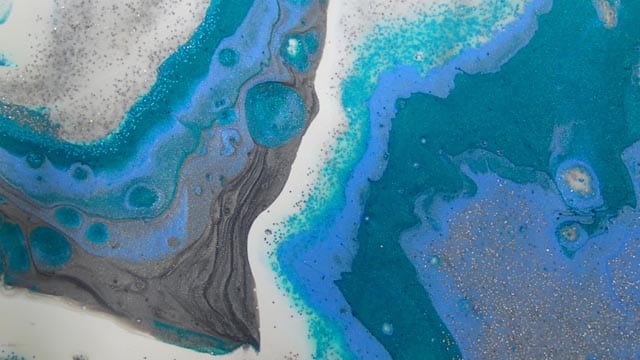
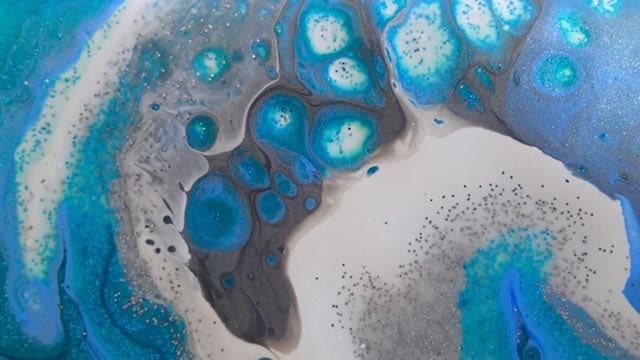
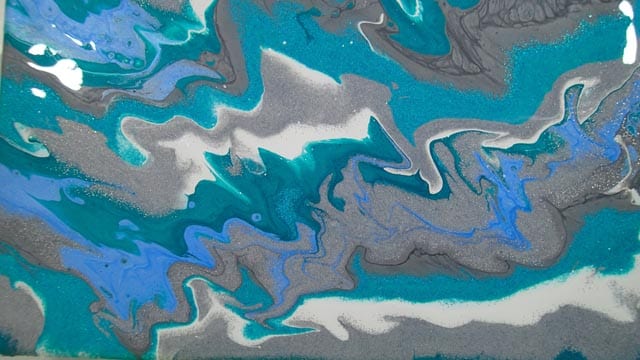
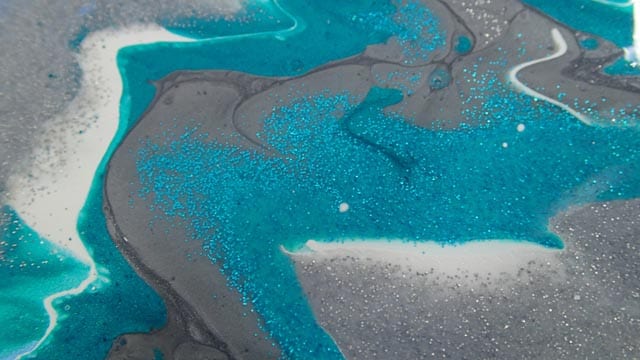
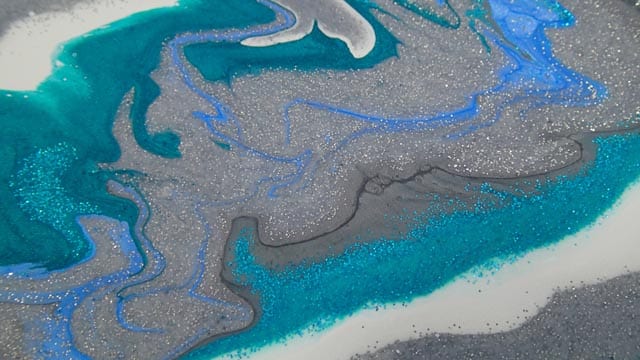
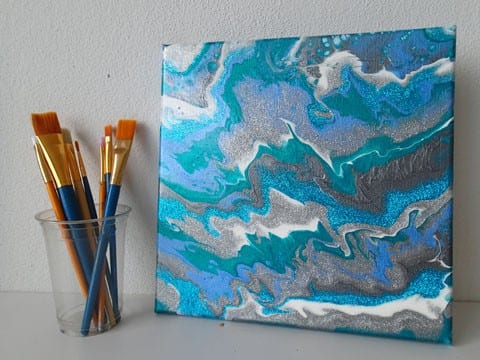
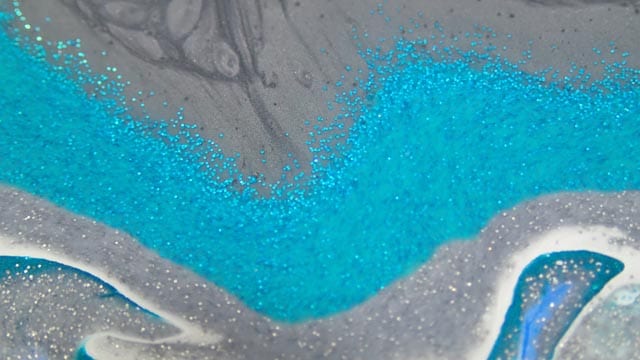
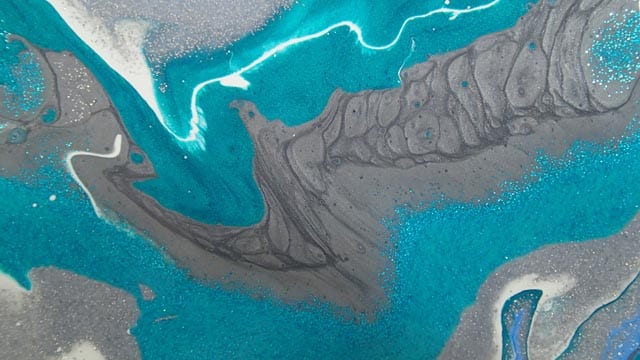
I can’t tell you how much I love how this turned out. In truth, those glitter paints go a very long, long way. The glitter in them is really concentrated, and it doesn’t sink into the other paints at all, so you’ll get the benefit of all of it in your pour. The sits nicely on top of the other paints too, and gives a really astonishing look. If you love the look of the mica in resin pours, then I think you will love the 3d effect you get by using these glitter paints in your pours.
TIP – use a little bit. You don’t need to use anywhere near as much as I did in the video, unless you want gazillions of glitter in the finished work.
See what I mean about the glitter? Wow – wee. It’s an amazing paint. I bought the full set here which includes Peridot; Turquoise; Amethyst; Tourmaline; Garnet; Fire Opal; Florentine Gold; Sterling; Obsidian; and Sugar Cube. In this pour, I used the Turquoise and the Sterling Silver. You can get cells with this paint too, if that’s your thing. It turned out really beautiful in this swipe I did earlier, with Sugar Cube.
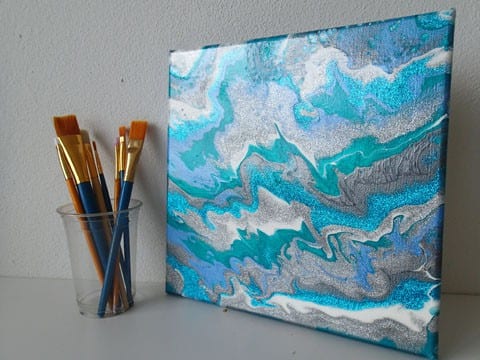
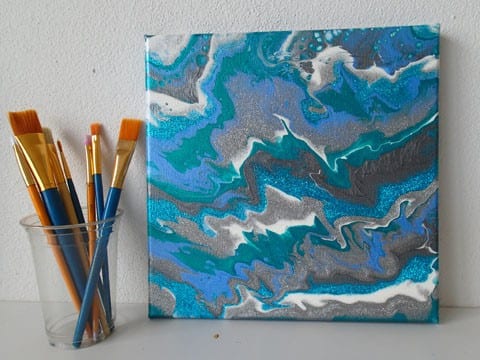
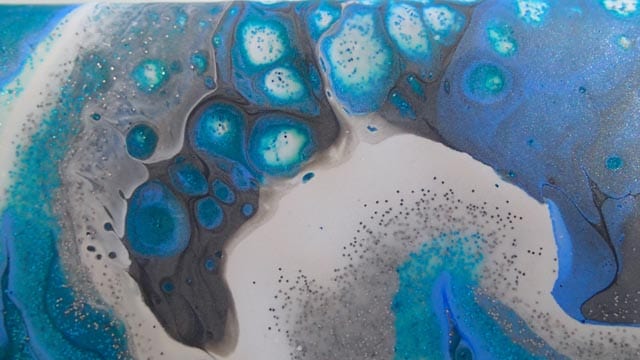
Check out the slideshow below for more gorgeous photos, both wet and dry, and close-ups of all the great details. You’ll love how that glitter looks.

After being told in high school that she was so bad at art that she should switch to another subject, Deby didn’t paint again for 35 years. Then a stroke released a new wave of creativity and she began exploring with dot painting, abstract and eventually acrylic pouring, and at last the joy of working with color returned. You don’t need ‘talent’ to be an acrylic pouring artist – just enthusiasm, some basic instruction, and a willingness to try, fail and try again. Paint along with her and learn from her many mistakes, and you’ll soon make great art together.