

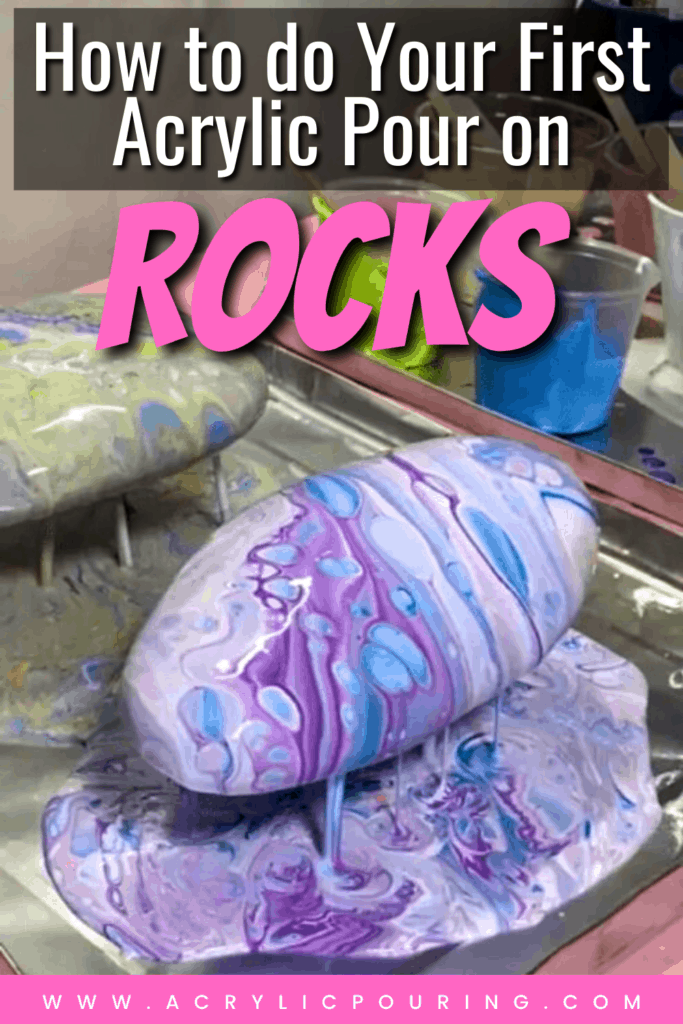
I fell in love with rock painting through a couple of different kindness rock groups that I found online. I participated in that for about one year and then I happened to be on the internet one day when I saw a video on acrylic pouring. I was mesmerized by this technique and wondered if I could use this method on my work? I decided that I was up for a challenge and that I would give it a try, on rocks!
Why not, I reasoned with myself and thought, what do I have to lose? So, I searched and watched any YouTube video or article I could find on acrylic pouring using other mediums; However, there really wasn’t much information available on the subject of rock painting.
Eventually, after a lot of research and trial and error, I found a way to take advantage of painting rocks using my own style.
I have been experimenting with acrylic pour techniques for just over two years now. I am loving every minute I spend to paint rocks.
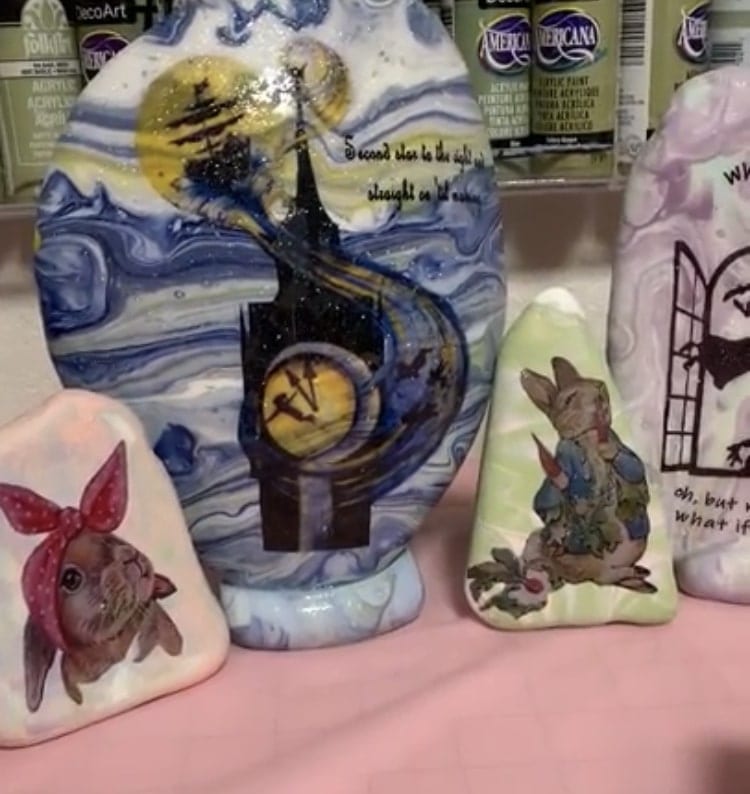
To prepare river rocks for acrylic pour:
- Dry brush the rocks to remove excess dirt and debris.
- Wash the rock(s) in dawn dish soap and a small amount of bleach, I use bleach to help destroy any bacteria or foreign matter on the rock.
- Rinse well, let dry on wire rack for at least 24 hours.
- Apply two coats of Gesso for good paint adhesion. Let that dry for 24 hours.
- After the rocks are gesso’d and dry, it’s important to handle them with gloved hands only. This helps to prevent oil or dirt from your hands transferring to the rocks.
All this while, I am mentally working on different rock painting ideas and inspirations that I have collected since I last painted rocks.
Let’s begin pouring!
First, I set up my pouring area. I like to use plastic table cloths from the dollar store, aluminum foil lids for buffet pans and pizza savers to hold my painted rocks for drying.
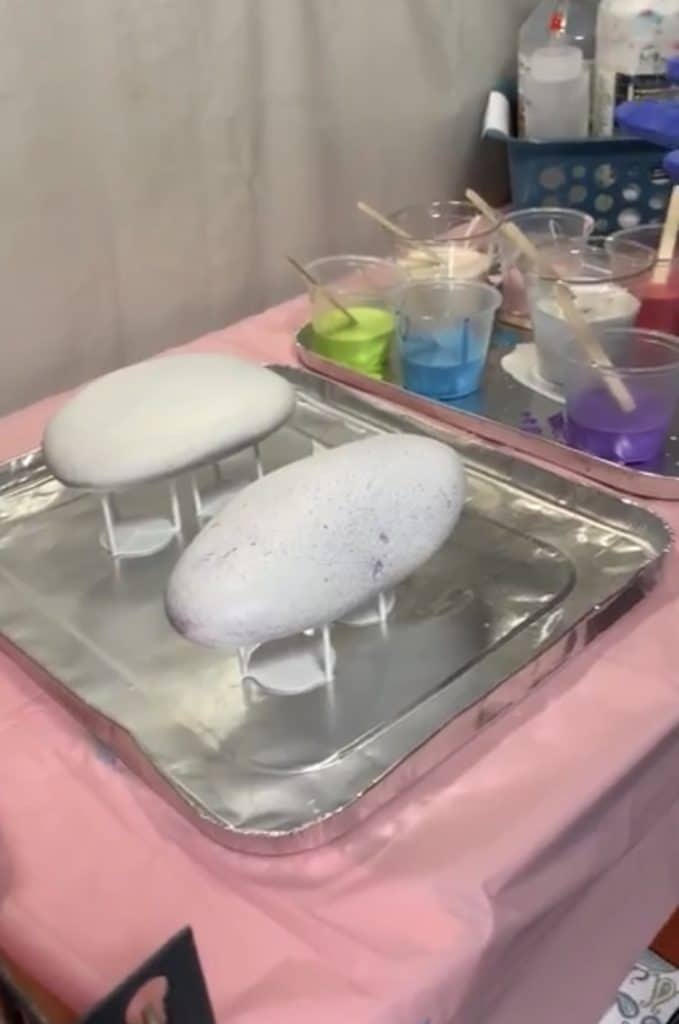
I choose the colors for the rock art based on the image I am going to put on it. I will use anywhere from three to seven colors for the pour. As far as rock painting supplies are concerned, I like to use white acrylic paint or pastel colors for my buffer paints (the colors that go between the different layers of acrylic paints)
Once all of this is completed, I will be ready to mix the paint.
Now back to paint mixing.
Floetrol is my mixing medium of choice. The amount needed for different paints varies from rock to rock. An easy rule of thumb is to mix the Floetrol and paint until the mixture is the thickness of heavy cream.
Double-check the mix by loading a stir stick with paint then tip so the paint can “flow” off the stick. If it is the consistency of a glob the paint is too thick and if it is runny it is you will need to thicken it up by adding more paint.
Some, heavy pigmented paints like artist’s grade paints will need considerably more medium. I have a mixture of 90% water and 10% Floetrol I use to help mix the heavy bodied paints, adding a little bit of this mixture before adding Floetrol helps with blending the paint. This mix will help to prevent breaking down the polymer binders of the paint, which can cause the paint to lose its color.
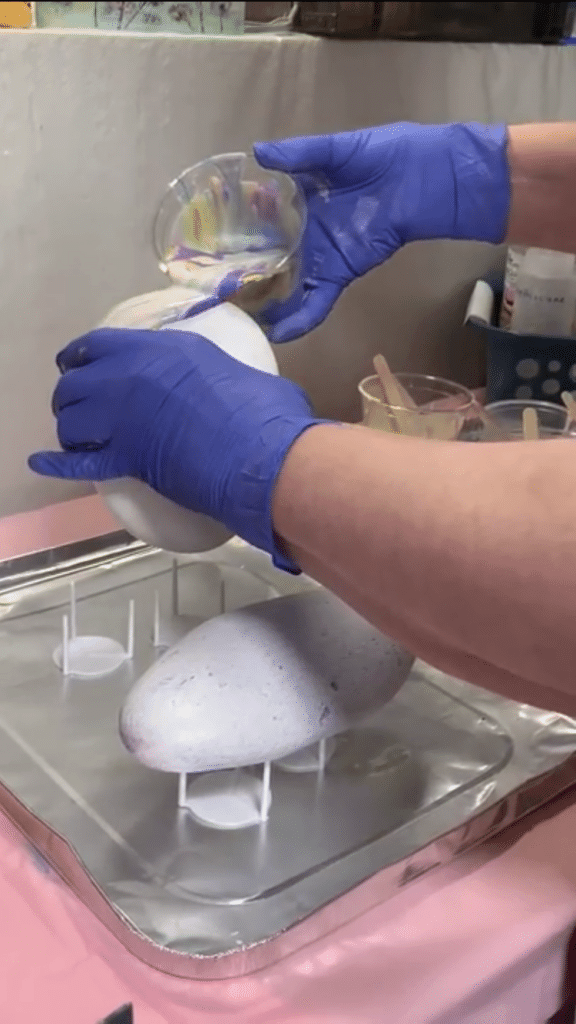
When I pour, I hold the rock with one hand and pour over the entire rock. Pouring this way gives the rock a more completed and even look. Place the rock on the upside-down pizza savers to dry for at least 24 hours or longer depending on the paint that was used in the process.
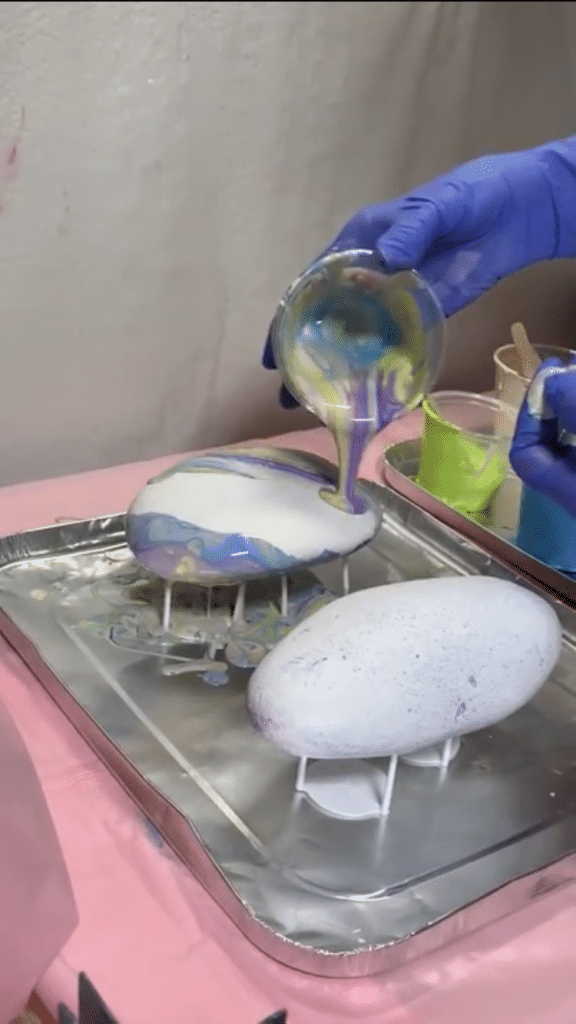
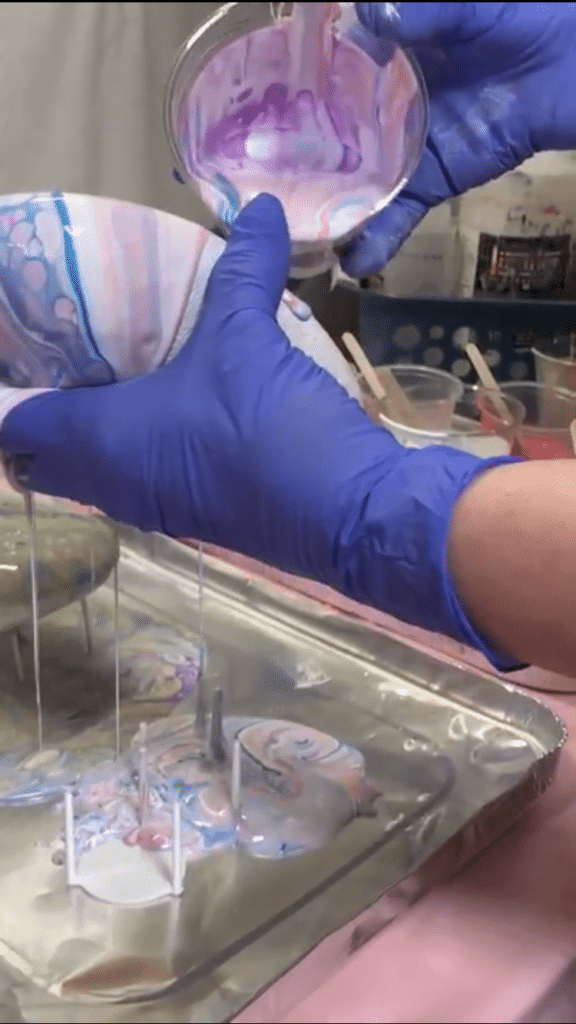
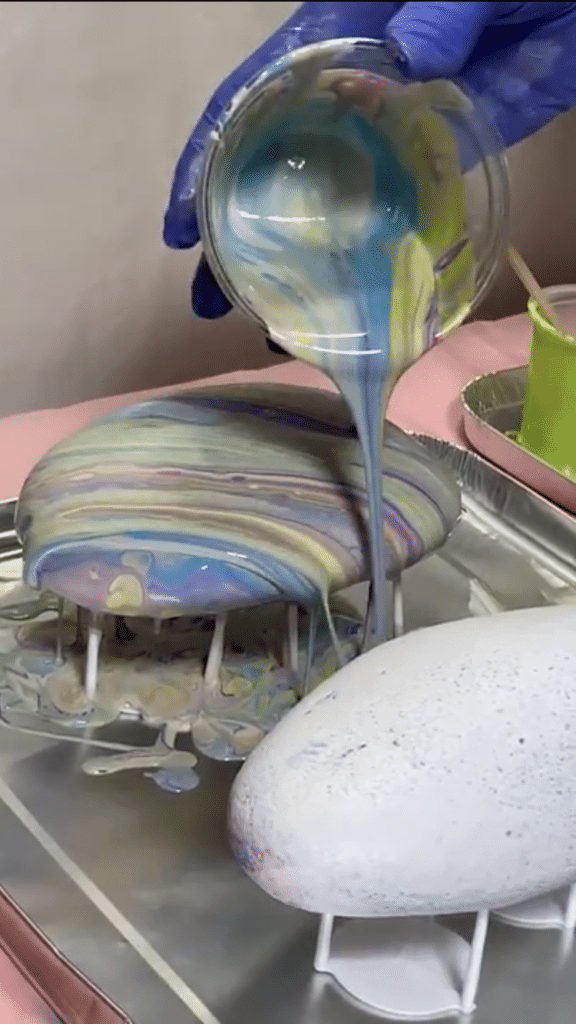
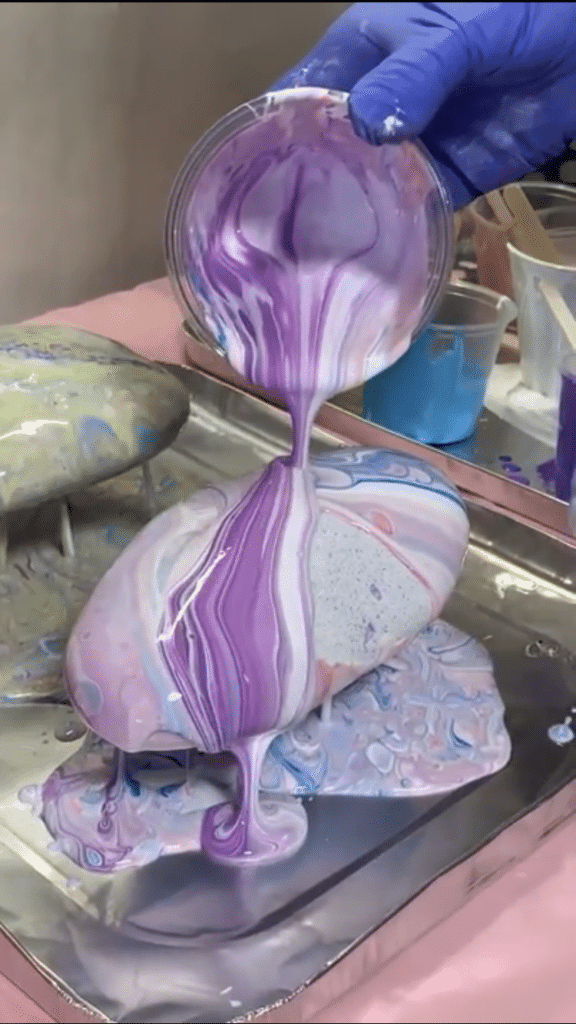
Thanks for taking time to pour rock with me!
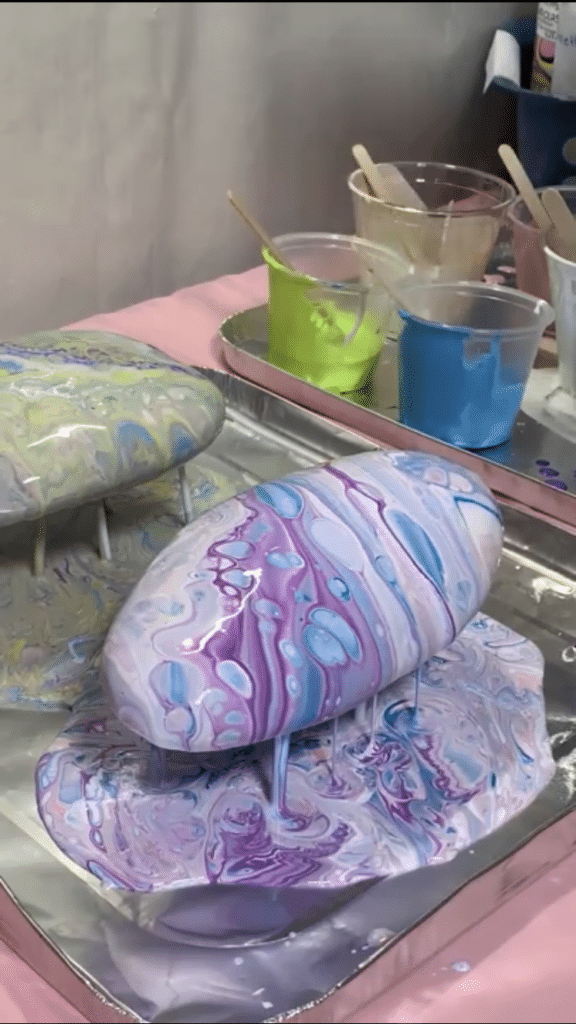
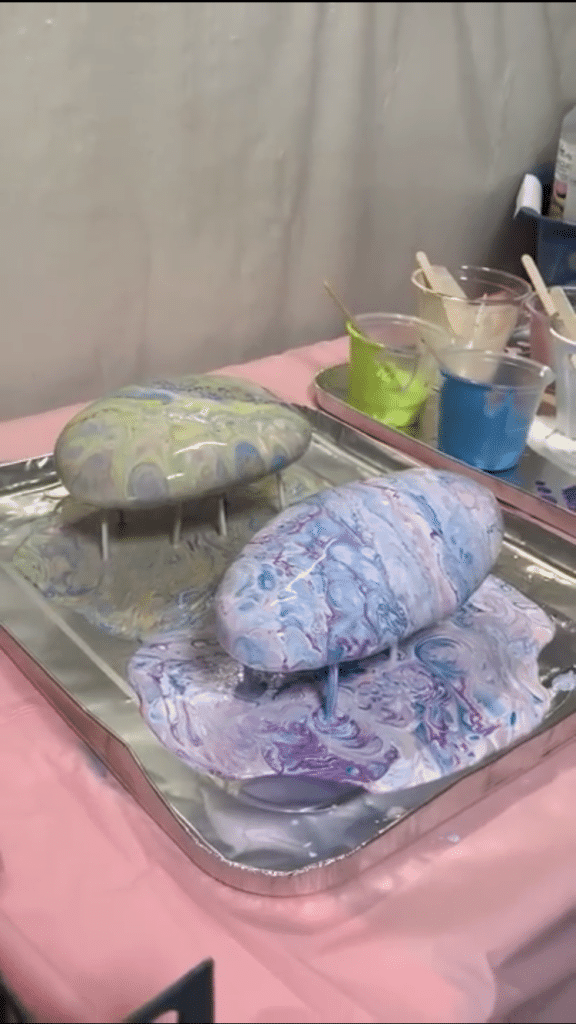
Frequently Asked Questions About Rock Painting with Acrylic Paint
1.Will acrylic paint stick to rocks?
Yes, both water-based paints as well as acrlic paints stick well to flat rocks.
2Do you have to seal acrylic paint on rocks? What do you use to seal painted rocks?
Yes! Once you are done painting rocks, you should absolutely seal them to protect your paint in the long run. You can seal the painted stones using an acrylic varnish with UV protection. The idea is to use a polyurethane product, that doesn’t turn yellow when exposed to sunlight.
3.Do you need to prime rocks before painting?
Yes, before start to decorate rocks, it is crucial to prime them. You should start with a white base coat of primer, or a coat of acrylic paint. Not only will this give you a better surface to work on, but will also help enhance the look of your chosen paint colors.
4.What is a Dirty Pour?
Dirty Pour is just another name for Acrylic Pouring. It is essentially a paint pouring technique, wherein you mix mutiple paint colors in the same container, and then pour in on your chosen surface.
Please check out more of my art at the following link Painted Rocks By Cat
You are also welcome to come visit my Rock Auction Group, Rock That Art