
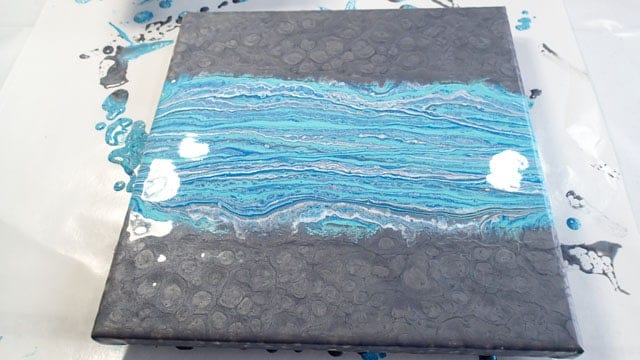
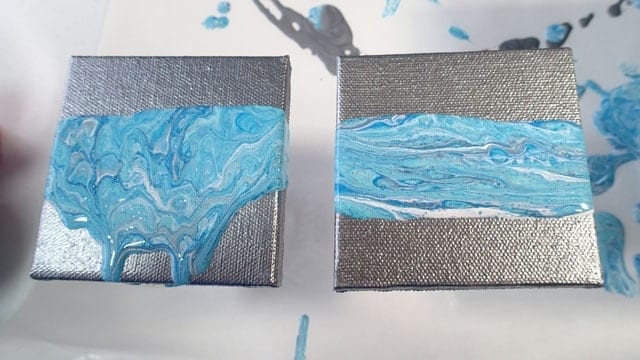
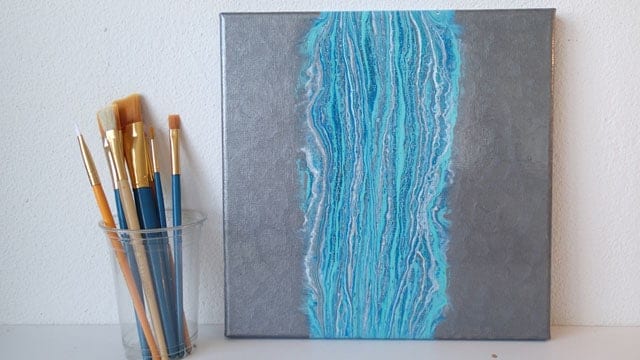
Using metallics can be tricky. In a previous pour I used glitter and metallics against a black negative space, so I wanted to try a similar technique with silver in the background instead of black.
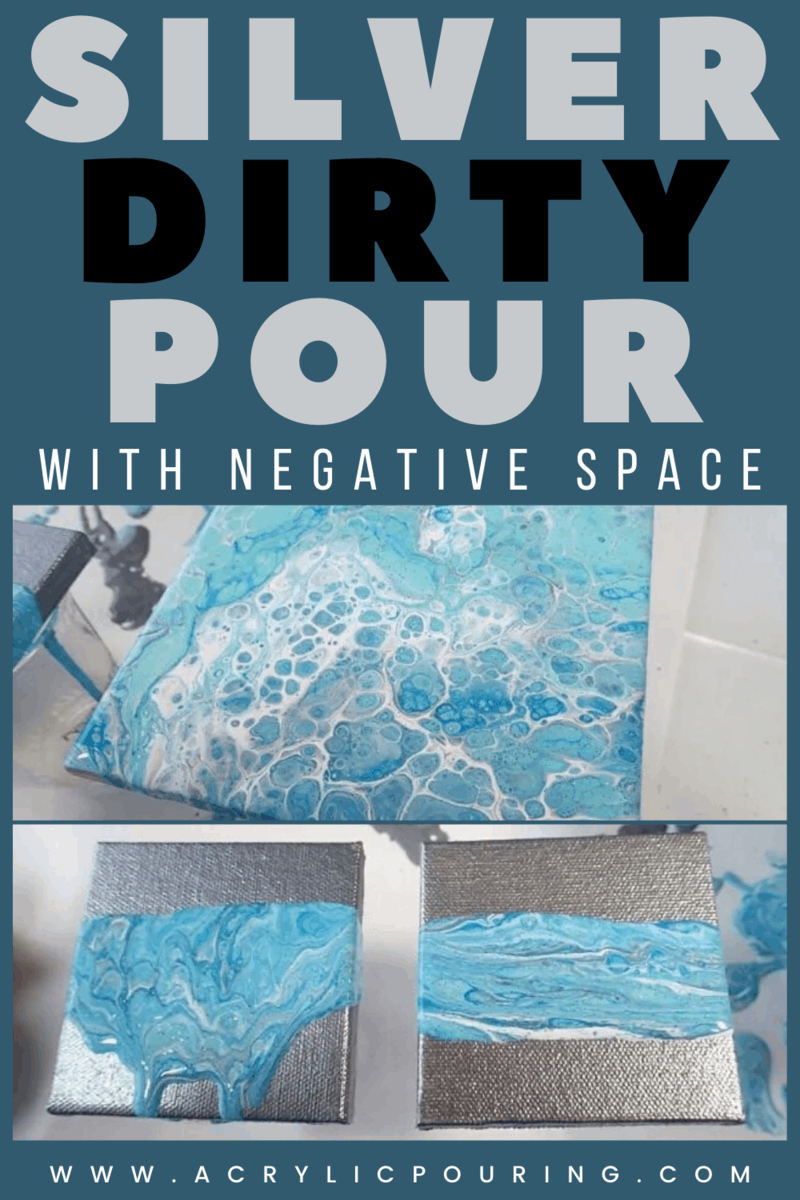
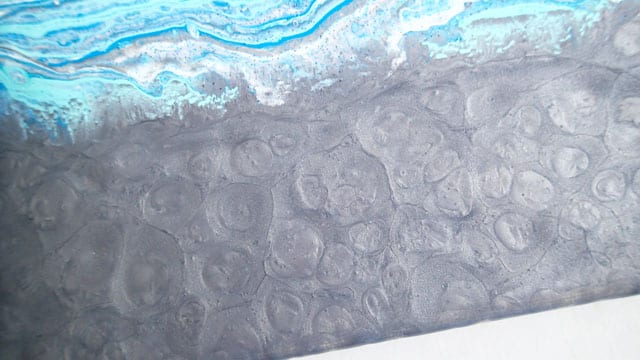
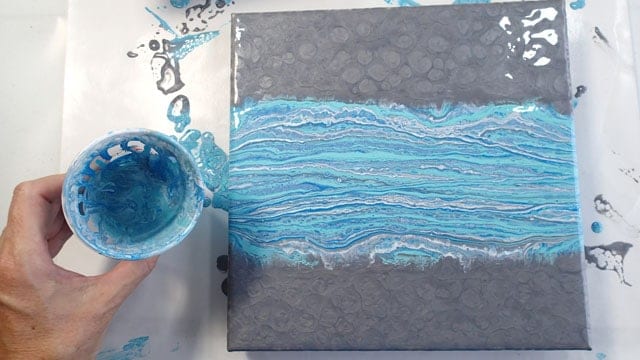
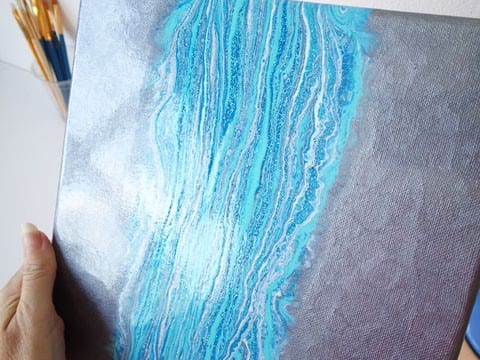
I’ll be using silver for my negative space this time around. It’s a color I don’t use very often in my pours because it always seems to dull the colors rather than create any actual silver areas in the pour, so this is the perfect chance to use some of it up. It is an interesting paint because it always creates cells like crazy in the cup and has a very ‘hammered metal’ sort of look to it, so I’m going to try to take advantage of that interesting textured effect.
Materials used in this painting:
Art Alternatives acrylic paint in white and silver
Sargent Art Turquoise
Deco Art Bahama Blue
Martha Stewart glitter paint in Turquoise, Obsidian and Lapis Lazuli
Economy canvas
Sargent Art Acrylic Gloss Medium
Floetrol
Treadmill silicone
Polycrylic protective finish
8oz squeeze bottles
Small containers with lids
Recipe:
All the squeeze bottles were mixed 2 parts paint to 1 part Floetrolplus water as needed for a creamy consistency. The craft paints were mixed with the Sargent Art gloss medium as needed. All paints had a drop or two of treadmill silicone.
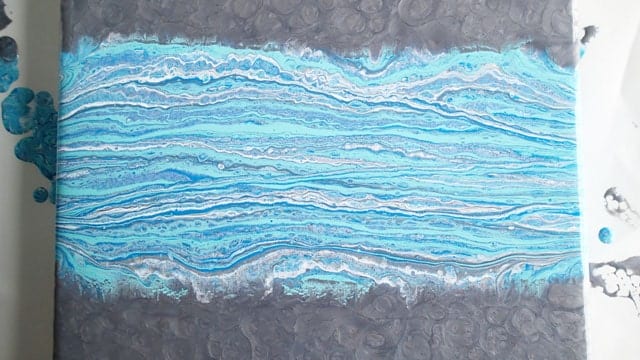
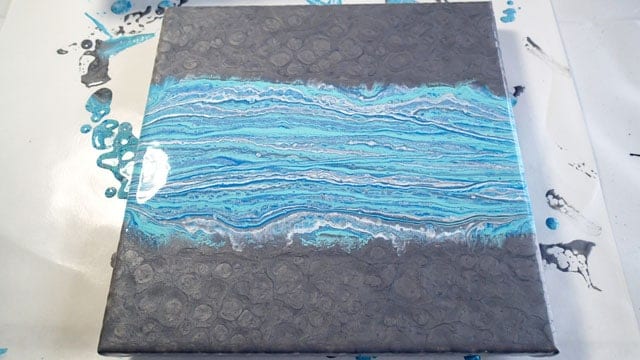
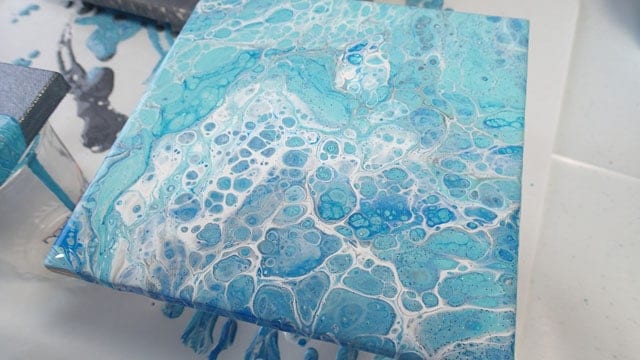
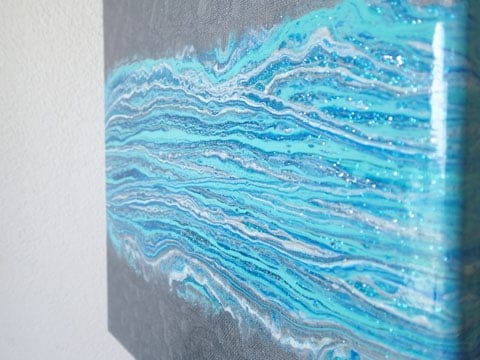
Well that was fun and interesting. I had thought I’d made a mistake by using silver with the silicone in it, but in fact it turned out really cool and I loved the effects of it. Once dry, the sparkly and glittery paints really came alive. A few coats of a protective gloss finish and the painting is a stunner. If you love sparkly, glittery and metallic, give this one a try – or you can buy it at my Etsy store here.
Here’s my usual slideshow of images from this pour, both wet and dry and close-ups of the details.

After being told in high school that she was so bad at art that she should switch to another subject, Deby didn’t paint again for 35 years. Then a stroke released a new wave of creativity and she began exploring with dot painting, abstract and eventually acrylic pouring, and at last the joy of working with color returned. You don’t need ‘talent’ to be an acrylic pouring artist – just enthusiasm, some basic instruction, and a willingness to try, fail and try again. Paint along with her and learn from her many mistakes, and you’ll soon make great art together.