
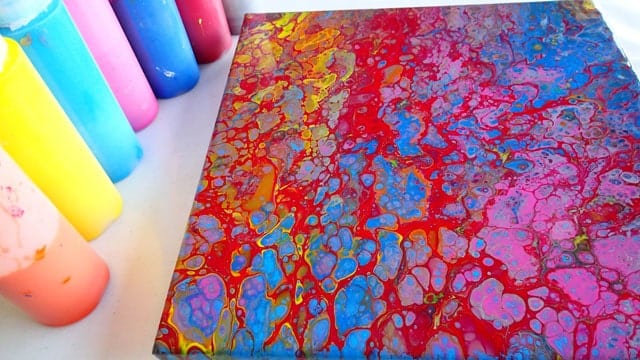
I recently made this record pour with a split dirty pour – different colors in each side of the cup. It worked beautifully for a dirty pour, but what would happen if I tried to do a flip cup acrylic pour and used the same idea, to put totally different colors on each half of the cup. Would my painting have two distinct halves? Let’s try it and see.
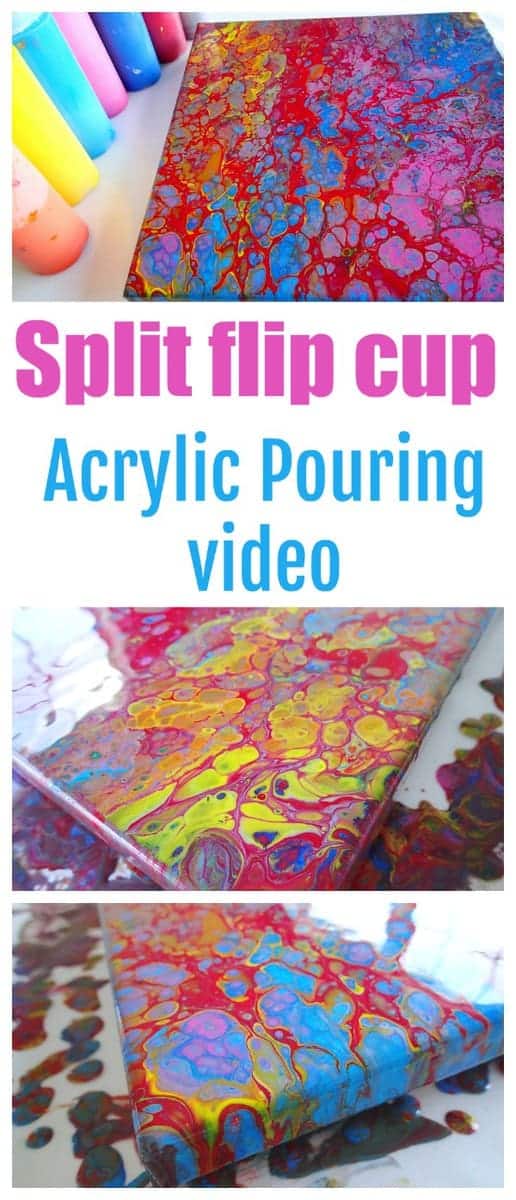
In this painting, I’ve decided to use a lot of silver. I’ve never been a big fan although I love metallics and I love gold etc, but the silver to me seems to dull the colors somewhat and look more of a dirty grey than a shiny silver – in pours that is. When I paint with it, I love it, but in pours not so much. So I am going to try to match these very bright and vivid colors with the silver between all of the layers and see what happens. Will it make the painting sparkle, or make the painting dull?
Materials used in this project:
Various colors of acrylic paint
Floetrol
Treadmill belt silicone
Gallery wrapped canvas
8oz squeeze bottles
Paint markers
Elmers Paint Markers
Those two sides of the painting were such a nuisance. The other two sides were perfect but I had to keep repainting in with the drips and it was OK when dried, but not as it should be. It’s so disappointing and confusing when that happens. I really do think it must be something on the canvas that causes that to happen – will teach me that I should always gesso my canvases before painting, as a precaution. Once the painting was dry, it wasn’t so vibrant as when wet. The colors will still good and varnishing would have brought some of it back, but it was like that silver paint had dulled them somehow, especially on the one side. That gave me the idea that it was the perfect coral reef background for a painting I had in mind for my husband and you see a sneak peak of that at the end, where I’m working on painting a lionfish on the pour.
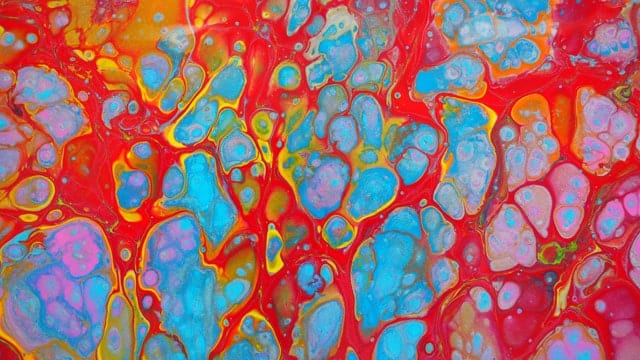
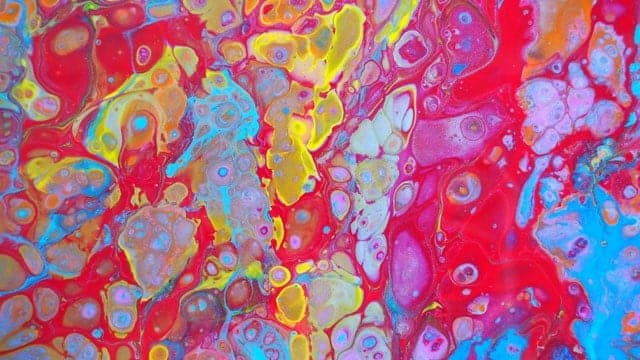
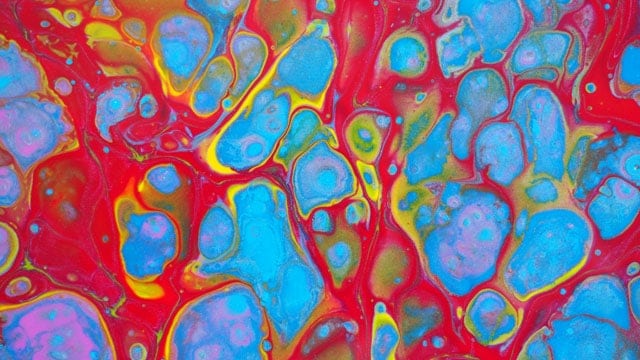
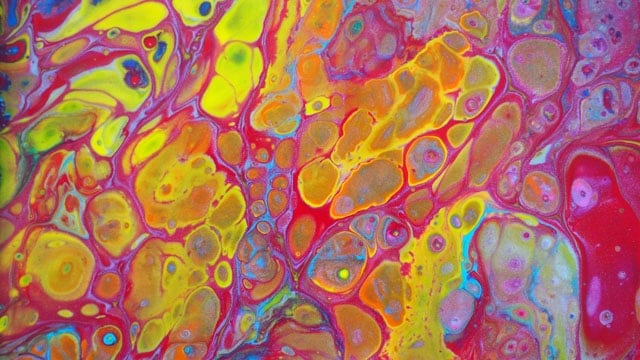
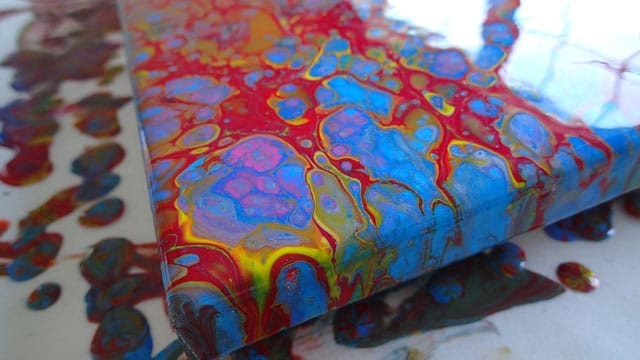
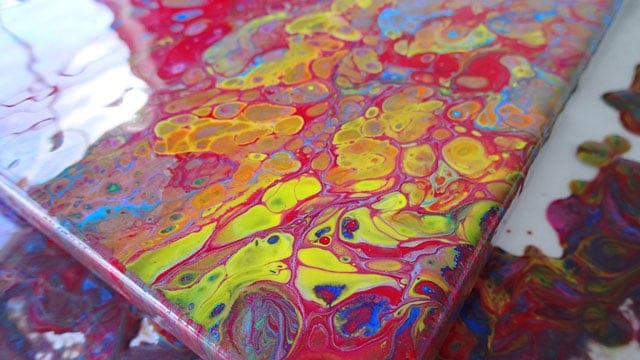
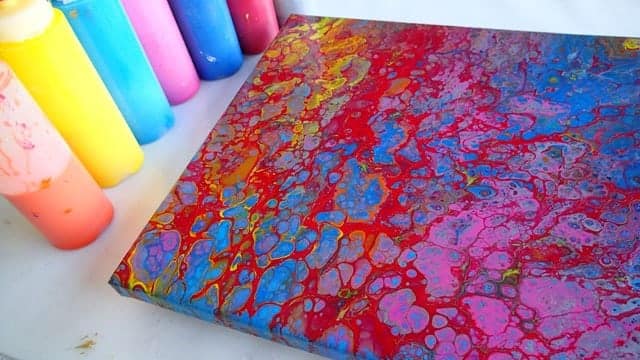
Here is a slideshow of images from this pour, with close-ups of some of the awesome details.

After being told in high school that she was so bad at art that she should switch to another subject, Deby didn’t paint again for 35 years. Then a stroke released a new wave of creativity and she began exploring with dot painting, abstract and eventually acrylic pouring, and at last the joy of working with color returned. You don’t need ‘talent’ to be an acrylic pouring artist – just enthusiasm, some basic instruction, and a willingness to try, fail and try again. Paint along with her and learn from her many mistakes, and you’ll soon make great art together.