
A recent accident got me to thinking. I was rushing to get some paintings finished, and I sprayed them with a couple of my spray varnishes I had and then immediately got very concerned because I had forgotten to clean off the silicone! Would they be ruined?
There was nothing I could do except wait for them to dry and see what happened. Nothing happened. They were fine. The silicone hadn’t created any problems with the varnish. So this got me to thinking. Maybe spray varnishes apply differently to the brushed on varnishes and aren’t so easily affected and separated by any silicone oil left on the surface. I went ahead and sprayed on more layers, still without cleaning and all was just perfect. Just the same as if I had fastidiously cleaned them. Is this a breakthrough? What did it mean?
Did it mean that if I used a spray on sealer, I could seal my paintings and tiles without taking the time to remove the oil? That could be a great time saver. Could I then apply a spray sealer first to ‘block’ in the oil and then go ahead and use my lovely Polycrylic brush-on varnish over the top and still get a perfect finish? I had to test it!
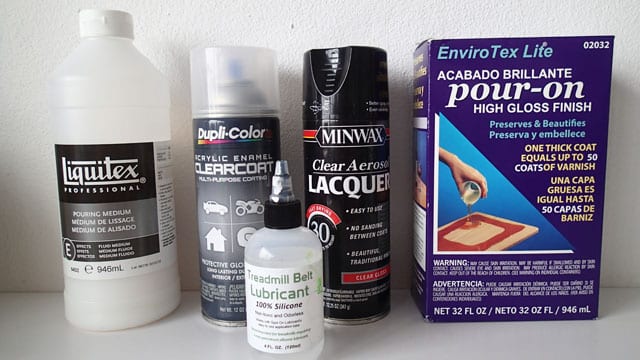
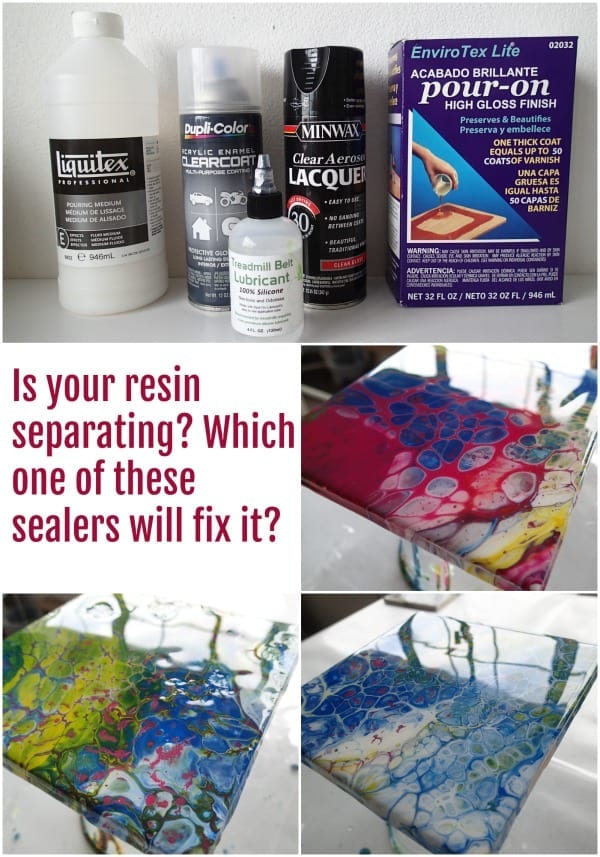
Materials used in this project:
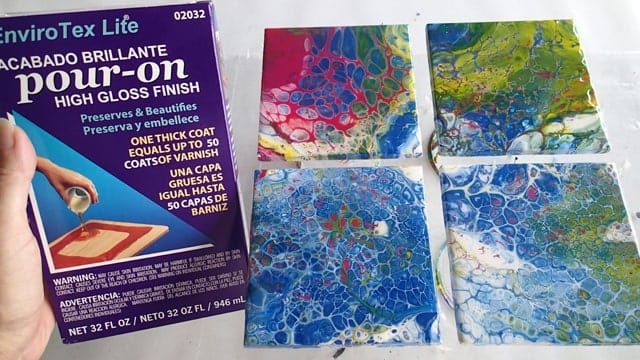
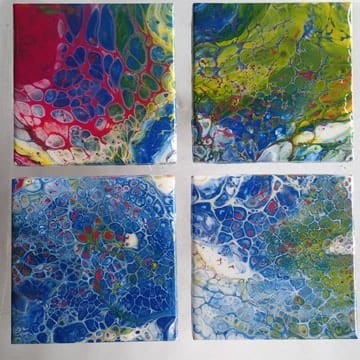
Existing 4 test tiles with silicone from this video
Liquitex Pouring Medium
Minwax Clear Aerosol Lacquer
DupliColor Acrylic Clearcoat
Envirotex Lite resin
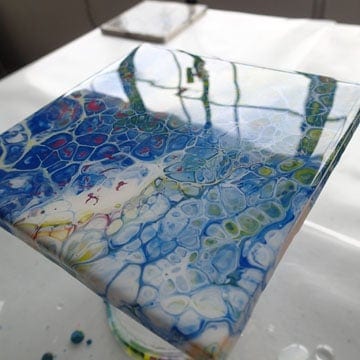
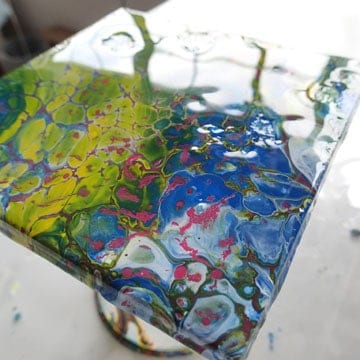
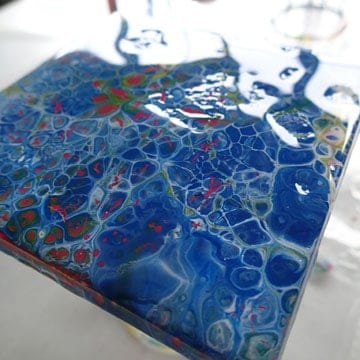
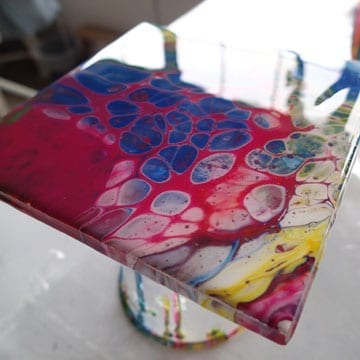
So in this video I am going to try to resin these 4 tiles that I had created especially for this test, using treadmill belt silicone oil in all of the colors. I’ll explain more in the video about how I prepared each tile and then we will see what happens if I apply resin, which is notorious for creating craters and voids if even the slightest bit of oil is present.
Hmm, ok so perhaps the idea was a good one, and there may be a product out there that would work. The Liquitex Pouring Medium was almost perfect. Perhaps if I did a thicker or second coat. I’ve heard mention that Art Resin recommend using the Golden Self Levelling Gelas a sealer before your coat of resin, but I don’t have access to that to test it. I hope someone out there will give it a try and let us know if there is a fool-proof way of using resin or varnish on our pours without getting those disappointing bare spots where it separates.
I was able to get a perfect finish on the cleaned one and the one with the pouring medium just by adding a drop of silicone oil to my finger tip and rubbing it around in the resin until everything smoothed out and I got good coverage. However I do feel that adding the oil to the resin gives it just the tiniest of a cloudy appearance and I’d like to avoid that if I can. Anyone else got any ideas? Or anyone had any success?

After being told in high school that she was so bad at art that she should switch to another subject, Deby didn’t paint again for 35 years. Then a stroke released a new wave of creativity and she began exploring with dot painting, abstract and eventually acrylic pouring, and at last the joy of working with color returned. You don’t need ‘talent’ to be an acrylic pouring artist – just enthusiasm, some basic instruction, and a willingness to try, fail and try again. Paint along with her and learn from her many mistakes, and you’ll soon make great art together.