
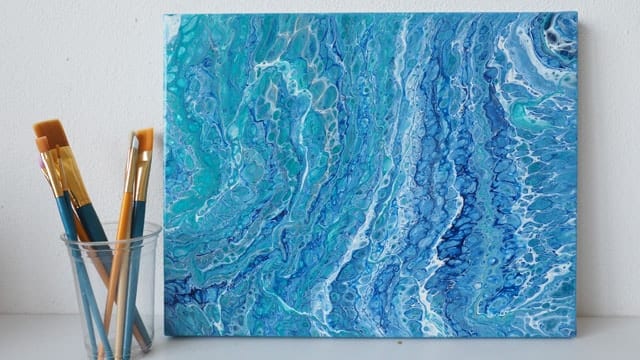
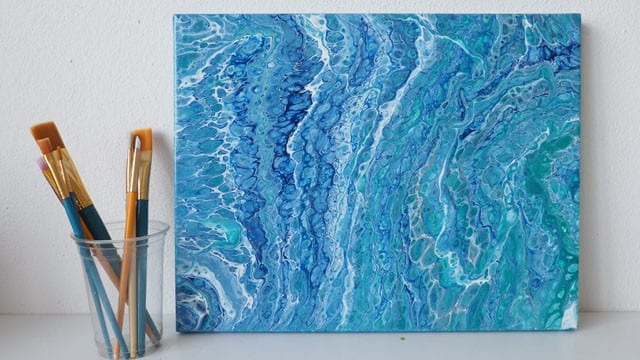
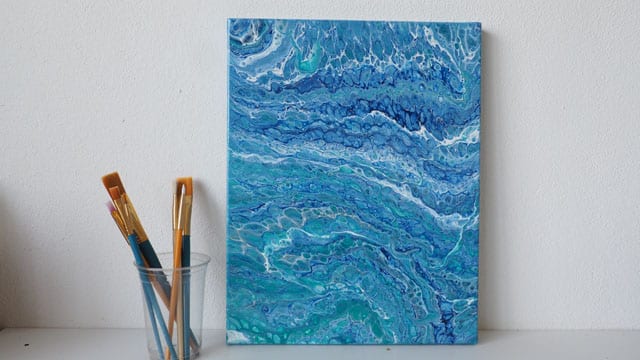
I think I might be falling more in love with the dirty pour. At first, I wasn’t sure. It can look sort of regimented, stripey, too formal. But combine the dirty pour with some nice graduated colors, or a limited palette, tilt it well and you could fall in love too.
The dirty pour sometimes gets a bad press. Not only is the name a bit off-putting, but sometimes the results can be overwhelming. Just too much going on – cells everywhere, too much color, too formal in the stripey design.
If you prefer the randomness of the flip cup, its understandable that the dirty pour might not be your favorite. But I encourage you to change it up a bit, try something different and give the good-ole dirty pour a chance to shine! I have seen some stunning paintings created with the dirty pour, and can only hope to make one as good one day.
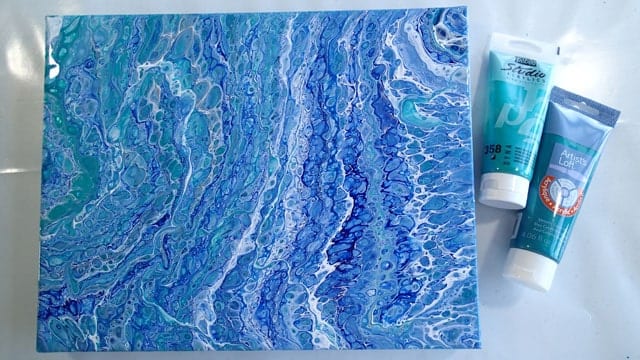
Materials used in this painting
Art Alternatives acrylics in titanium white, ultramarine blue and silver
Blick Student Acrylics in cobalt blue
Pebeo Studio Acrylics in iridescent blue green
Artists Loft acrylics in Metallic Cobalt Blue (which look green to me)
Floetrol
Treadmill Belt Silicone
Gallery wrapped canvas
Polycrylic gloss protective finish
8oz squeeze bottles
Recipe
Paints are mixed approx 2 parts paint to 1 part Floetrol, plus water as needed for a creamy consistency. Silicone oil is added at a couple of drops per color.
Video
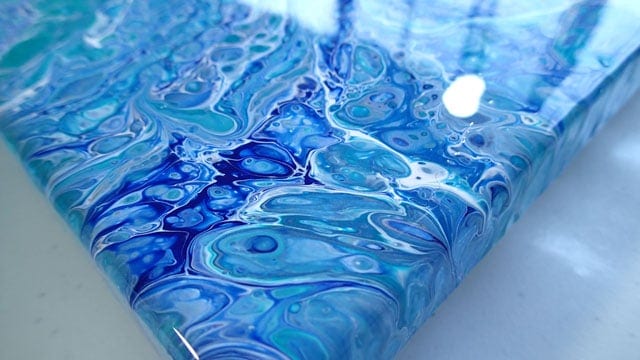
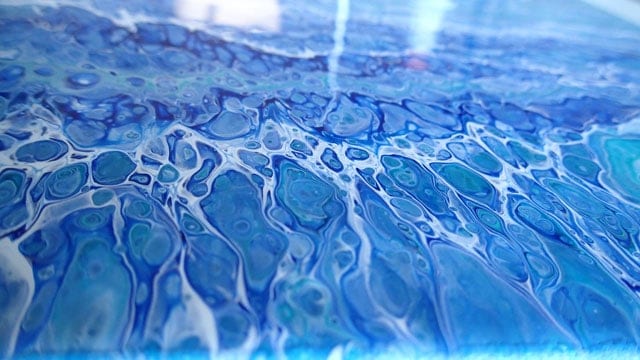
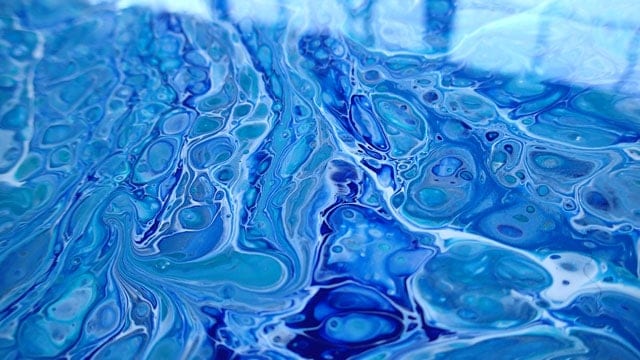
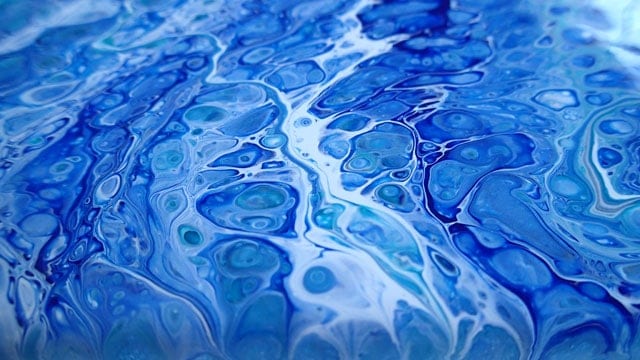
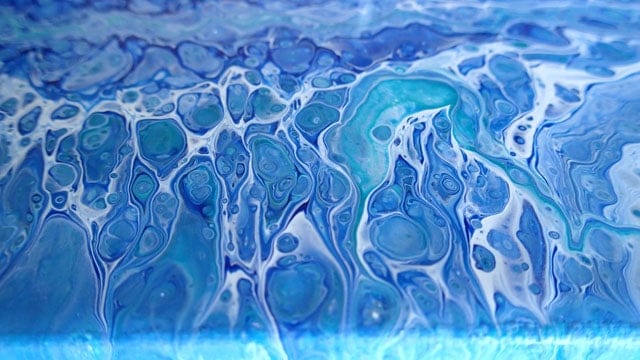
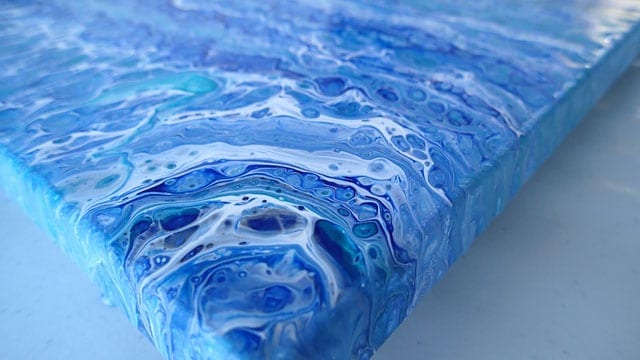
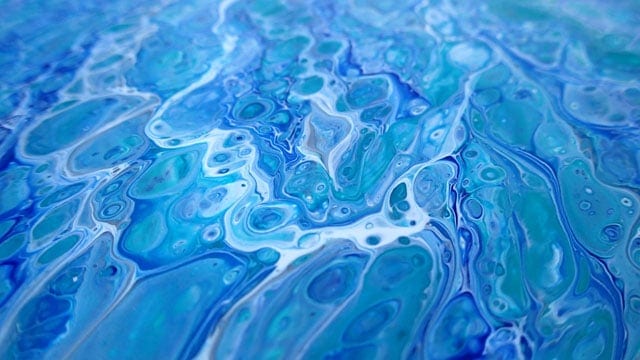
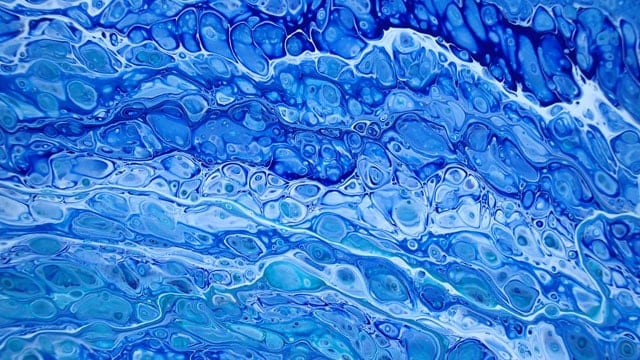
So that was pretty cool. For some reason I can’t get the video or photos to come out very well for this one. It all looks very blue when in fact there is a lot more white and green and a lot more contrast than my camera wants to show. It’s pretty cool. So give the dirty pour a chance today!
As usual, here is a slideshow of some photos of this pour, both wet and dry and close ups of the details.
Frequently Asked Questions
1. How do I create stripes in a dirty pour?
Stripes can be created by the way you pour your mixed paints, usually by doing a linear pour in a straight line across the canvas.
2. Can I use blues and greens exclusively for a themed pour?
Yes, using a specific color palette like blues and greens can give your artwork a thematic coherence.
3. How do I ensure the vibrancy of the colors?
Using high-quality, vibrant acrylic paints and avoiding overmixing can help maintain color vibrancy.
4. Can I manipulate the stripes after pouring?
Yes, tilting the canvas can help in manipulating the stripes and patterns.
5. How long does a striped dirty pour take to dry?
It usually takes between 24 to 72 hours to dry completely.
6. How to seal a striped dirty pour painting?
A clear, UV-resistant sealant is recommended to protect the finished artwork.
7. Is this technique suitable for beginners?
Yes, with some practice, beginners can achieve beautiful results with this technique.

After being told in high school that she was so bad at art that she should switch to another subject, Deby didn’t paint again for 35 years. Then a stroke released a new wave of creativity and she began exploring with dot painting, abstract and eventually acrylic pouring, and at last the joy of working with color returned. You don’t need ‘talent’ to be an acrylic pouring artist – just enthusiasm, some basic instruction, and a willingness to try, fail and try again. Paint along with her and learn from her many mistakes, and you’ll soon make great art together.