
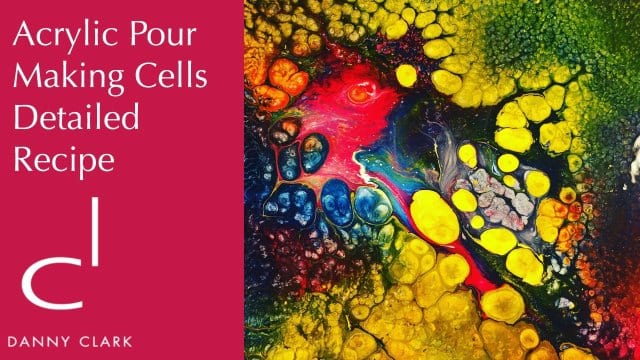
An understanding about pigment density and the specific gravity of paints and how you can use that info to help you create cells.
Frequently Asked Questions About Cells in Acrylic Pouring
1. What is the significance of cells in acrylic pouring?
Cells are distinct patterns created when different densities of paint react, adding visual interest and complexity to the artwork.
2. Can I create cells without silicone?
Silicone is a popular additive for creating cells, but other products like dimethicone or treadmill lubricant can also be used.
3. How can I achieve large cells in my pour?
Using a torch and tilting the canvas slowly can help in achieving larger cells.
4. How much silicone should I add to my paint mix?
Typically, a few drops are sufficient, but it can vary depending on the desired effect.
5. Should I mix the silicone thoroughly into the paint?
Light mixing is recommended as thorough mixing can diminish the cell effect.
6. Can I use any type of paint to create cells?
Fluid acrylics or acrylics mixed with pouring mediums generally work best for creating cells.
7. How long do artworks with cells take to dry?
It generally takes between 24 to 72 hours, but it can vary based on environmental conditions and paint thickness.

After being told in high school that she was so bad at art that she should switch to another subject, Deby didn’t paint again for 35 years. Then a stroke released a new wave of creativity and she began exploring with dot painting, abstract and eventually acrylic pouring, and at last the joy of working with color returned. You don’t need ‘talent’ to be an acrylic pouring artist – just enthusiasm, some basic instruction, and a willingness to try, fail and try again. Paint along with her and learn from her many mistakes, and you’ll soon make great art together.