
I bought a new product, the Sargent Art Acrylic Gloss. My intention was to use it as a varnish and compare with a couple of other products as a finish for ceramic tiles, but this interesting product can also be used as a medium. It says “Mix with acrylic paint to increase gloss, ease paint flow and increase transparency.” All that sounds good to me.
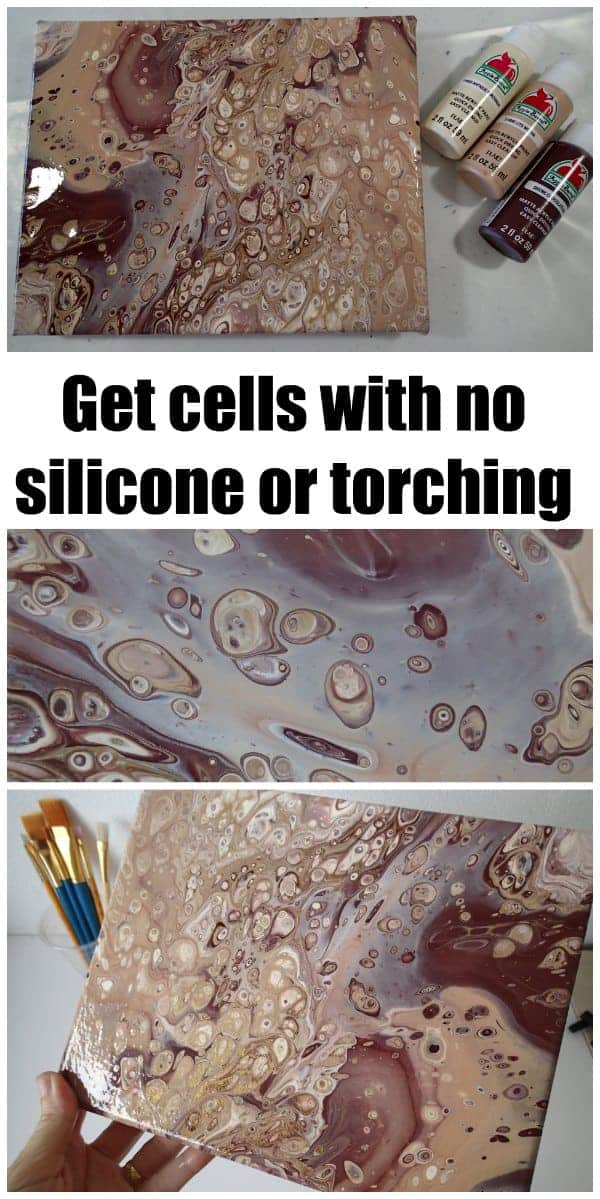
So I just had to give it a try. I had some new paints, a brand I hadn’t used before, a new pouring medium, and thought I would mix it all up a bit and try a flip cup pour without any silicone. How would these new products all react together? Could I get cells? I would have fun trying. So I’m going for an elegant and sophisticated palette of understated natural colors today – a trendy coffee shop feel.
For this flip cup painting I used:
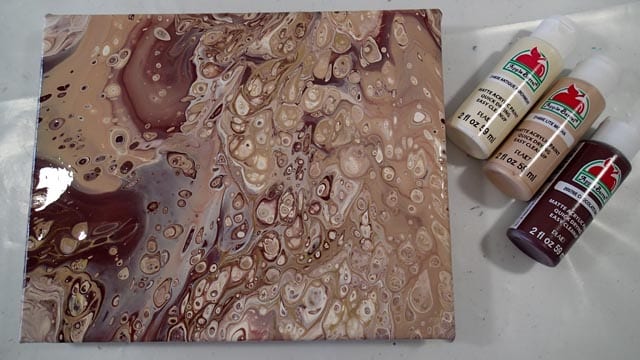
- Apple Barrel craft paints in Antique Parchment, Lite Mocha and Chocolate Bar
- Sargent Art Acrylic Gloss as a pouring medium
- 99% alcohol
- Some Art Alternatives Gold I already had mixed from a previous pour, containing Floetrol
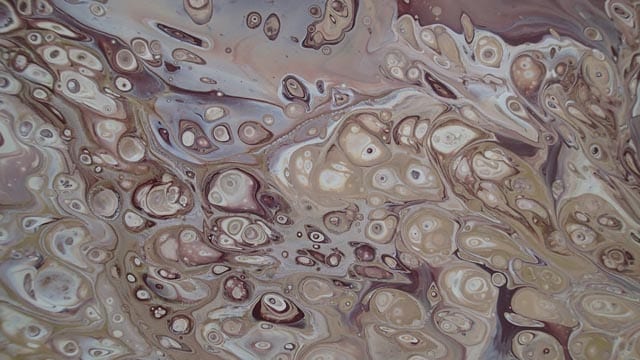
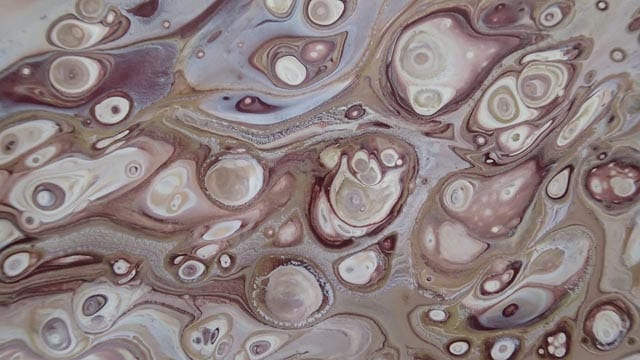
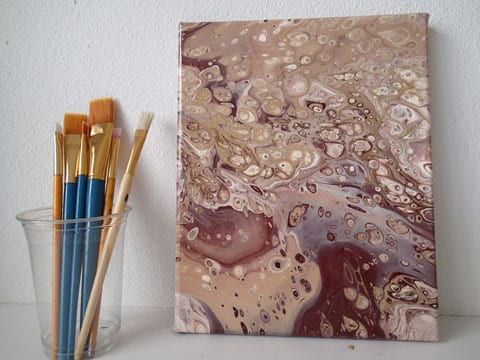
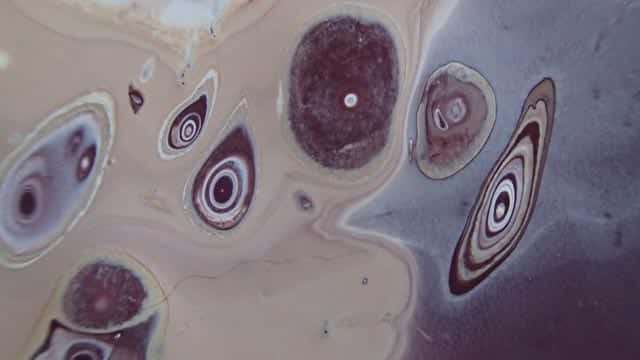
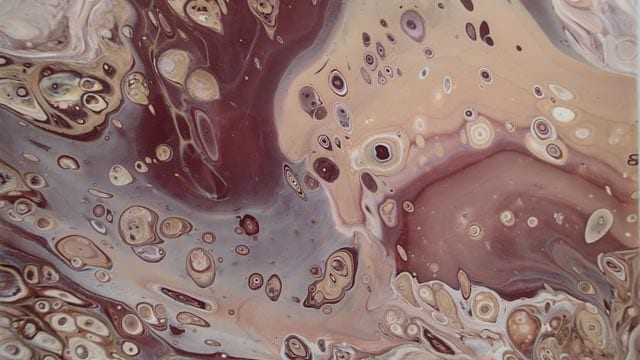
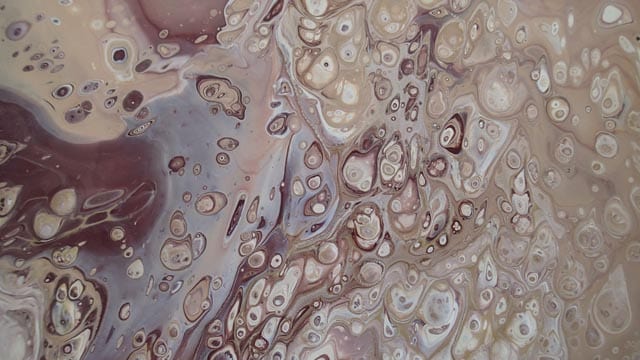
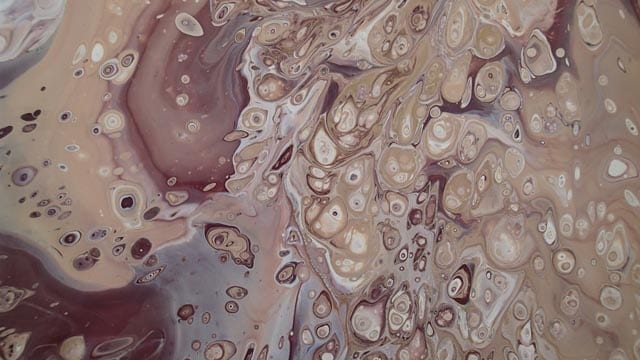
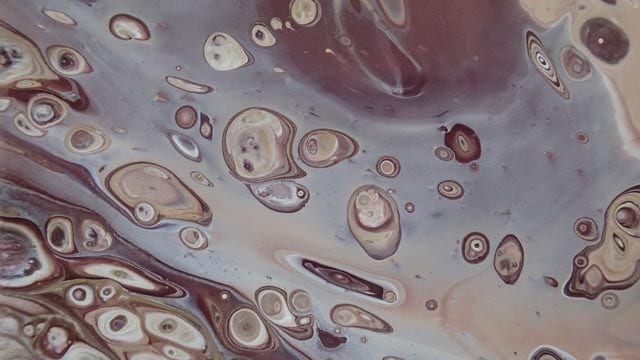
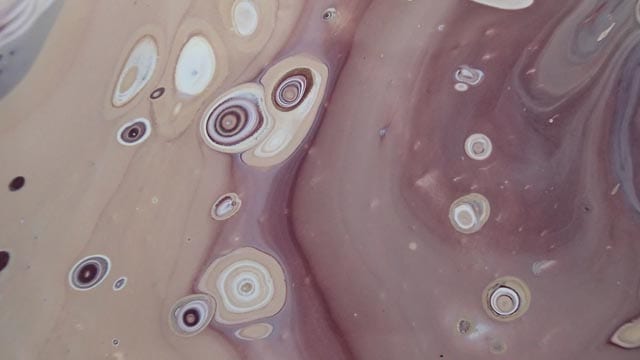
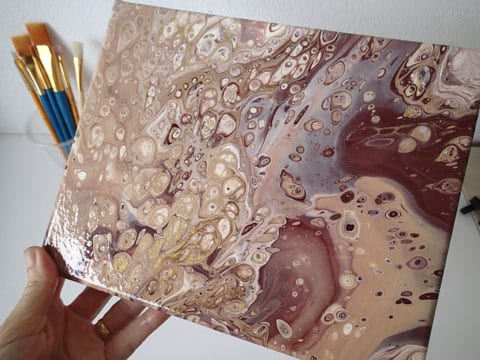
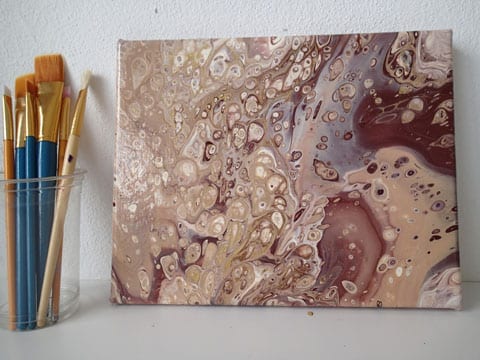
Check it out! Amazing cells without adding any silicone. No torching – just straight out of the cup it was perfect, and the cells moved beautifully, didn’t break up at all during the tilt. I loved it! What a fabulous result and quite unexpected.
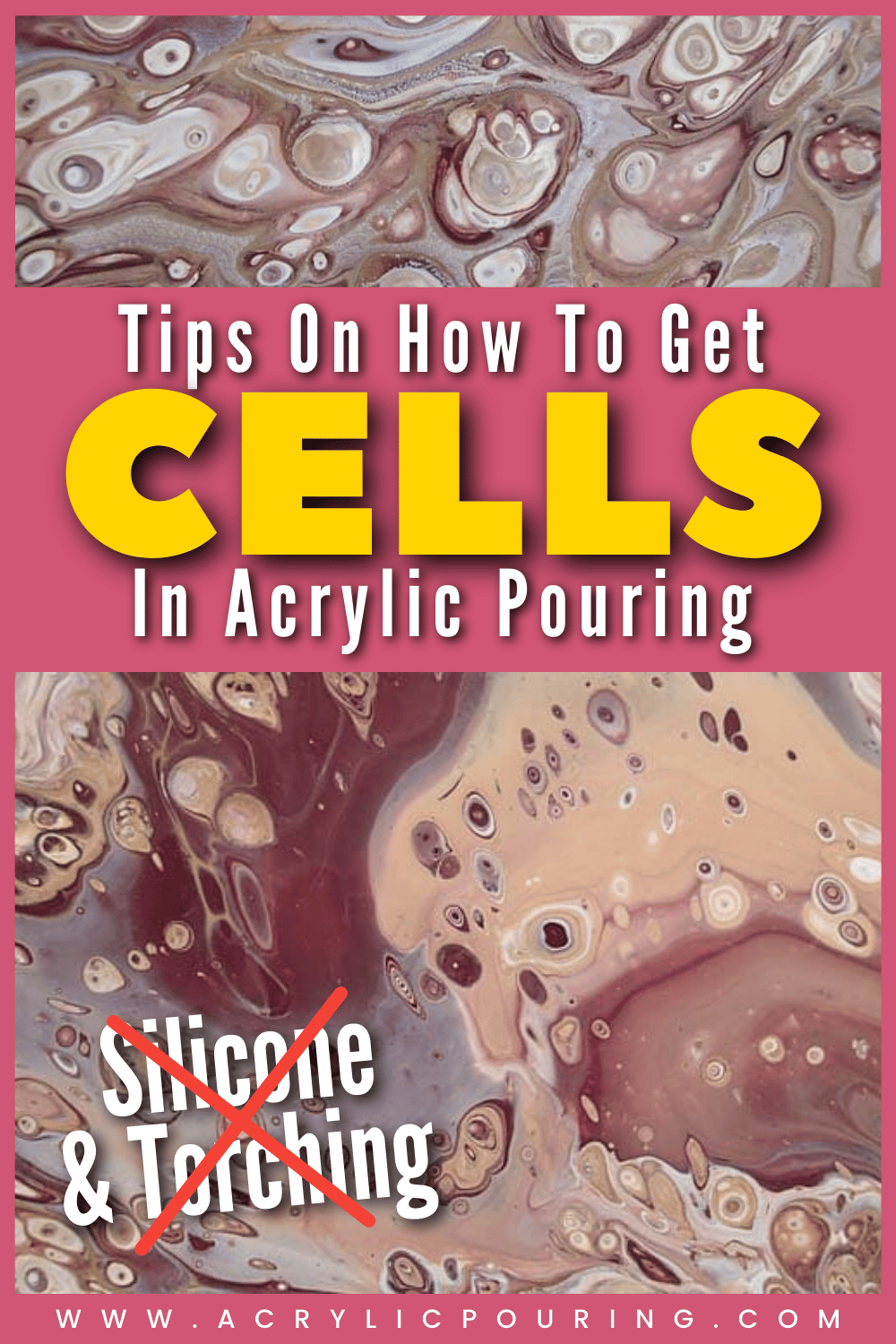
Video Tutorial: Recipe For Amazing Cells Without Silicone or Torching
That seemed so easy! I really never expected those results. Now, can I replicate them? Will it work for my other paint brands? Clearly further experimenting is needed. Watch for more developments as I try out this idea with some of the other paints I have. Have I hit upon a magic formula? Time will tell…
As usual, you can see some photos of the project in the slideshow below, both wet and dry pictures, and closeups of the details.

After being told in high school that she was so bad at art that she should switch to another subject, Deby didn’t paint again for 35 years. Then a stroke released a new wave of creativity and she began exploring with dot painting, abstract and eventually acrylic pouring, and at last the joy of working with color returned. You don’t need ‘talent’ to be an acrylic pouring artist – just enthusiasm, some basic instruction, and a willingness to try, fail and try again. Paint along with her and learn from her many mistakes, and you’ll soon make great art together.