
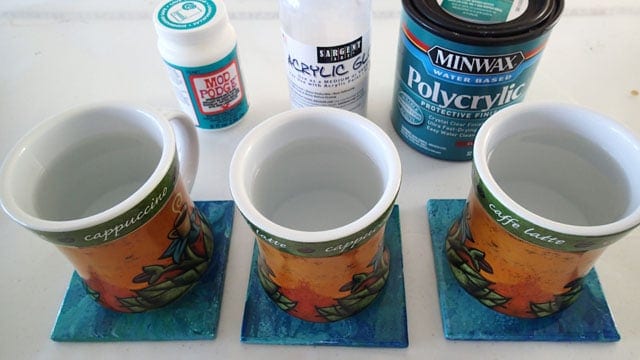
If you follow my YouTube channel or this blog, you’ll see that I like to paint on ceramic tiles. They are easy to find, inexpensive, practical, don’t take much paint and are easy to wipe off and reuse if the results are less than stellar – which often happens. However I have found that in order to actually use them as a trivet or a coaster, I should probably test out some different finishes to see which is the most hardwearing, which is waterproof, heatproof and doesn’t feel ‘tacky’.
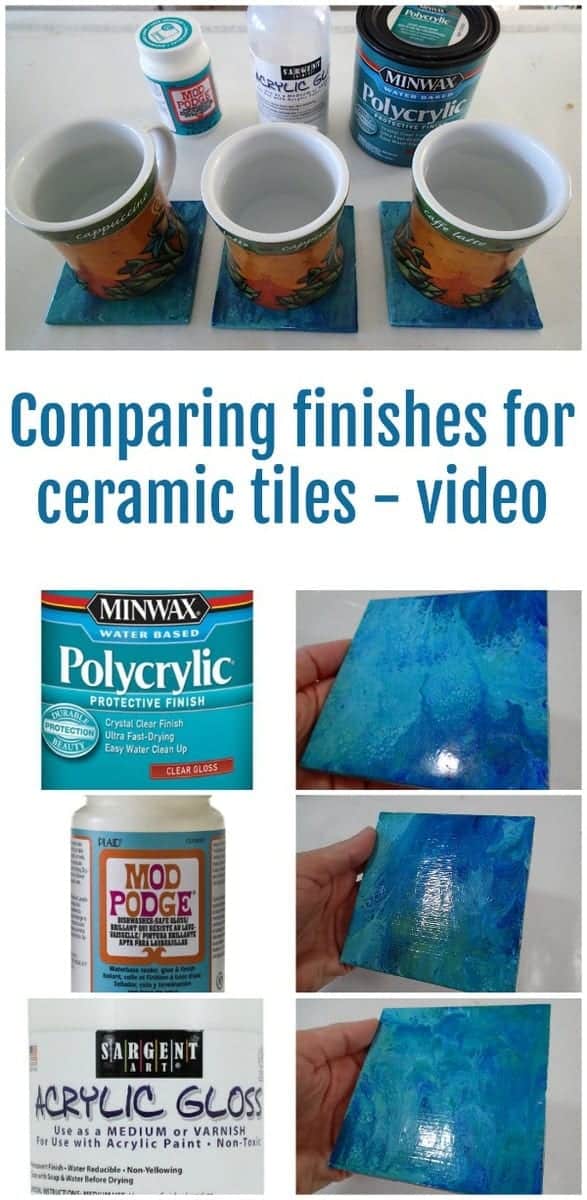
After having used the Polycryclic varnish on a lot of the tiles, I found that if I stacked them up together they would have a tendency to actually stick to each other just a little bit. A couple of them on the bottom of the pile even got some marks in the varnish where they had stuck to the one above just a little bit. If I was to give them away, sell them even, then I would want to make sure they were going to be actually good to use. No one wants to lift up their coffee cup and find the coaster was stuck to the bottom of the cup!
So let’s have a 3-way side by side comparison challenge. My usual Polycrylic Gloss Varnish, the Sargent Art Acrylic Gloss, and the Mod Podge Dishwasher Safe. These were recommended by other members of the group as a good way to finish the tiles so they would be waterproof and not tacky.
My testing was three-fold:
- Ease of use and comparison of finish
- Hot coffee cup test – would it be ‘tacky’
- Hot water test
Pros and cons of each:
Polycrylic – super glossy smooth finish. Easy to use. Doesn’t show brush strokes.
Sargent Art Gloss – product can also be used as a medium (more to come on that later). Inexpensive. Glossy finish.
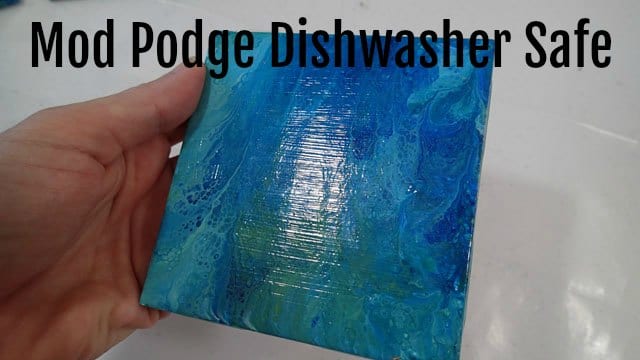
Mod Podge – a more expensive option. Takes 28 days to cure! Said to be dishwasher proof after curing. Difficult to apply, left the most visible brush strokes. Not very glossy. Surface not smooth.
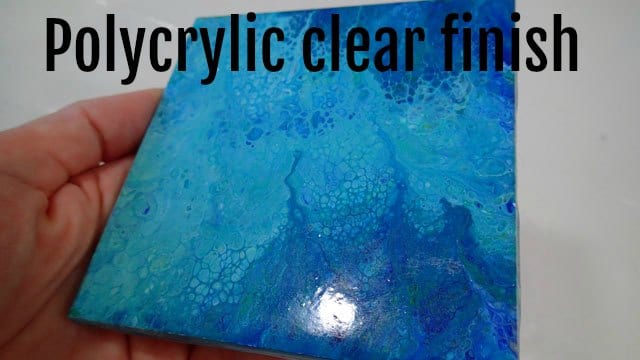
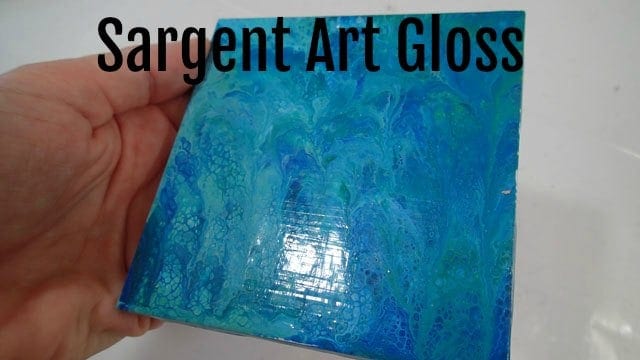
Conclusion and recommendation:
In conclusion, none of these were ideal for using a painted tile as a functional coaster for hot drinks. All became tacky and stuck to the hot cup within a couple of minutes. The Mod Podge was the least tacky but even that one quickly stuck to the bottom of the cup and had stuck the worst after the 20 minutes. The ideal solution is no doubt the table top resin which is heat resistant, but that’s expensive and would take your painted tiles into a much higher price bracket if you wanted to sell them as usable tableware.
I will continue my search and look forward to your recommendations too. Anyone out there carried out their own testing?

After being told in high school that she was so bad at art that she should switch to another subject, Deby didn’t paint again for 35 years. Then a stroke released a new wave of creativity and she began exploring with dot painting, abstract and eventually acrylic pouring, and at last the joy of working with color returned. You don’t need ‘talent’ to be an acrylic pouring artist – just enthusiasm, some basic instruction, and a willingness to try, fail and try again. Paint along with her and learn from her many mistakes, and you’ll soon make great art together.