
Once in a while, you just need to try something new, something out of your comfort zone. This is a two part series on doing just that. The first pour is a technique I call Invading Tree Rings. It is the first of two techniques I want to share.
Part two will be explaining the second technique called grafting which literally builds on the invading tree ring pour.
Where did these ideas come from? I love tree ring and geode pours, but I have tried many times to get something closer to how a tree physically grafts with those amazing swirls, gnarls, and cracks in the stumps. I’m obsessed with Burl wood’s beautiful swirls and those crazy cracks that form throughout the Sequoia stumps. They just have so much character!
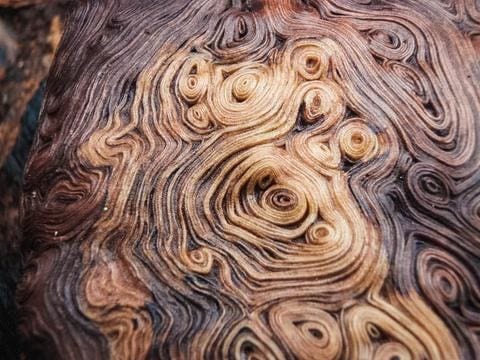
I’ve been trying to find a way to mimic them in my pouring. While nothing will be exact, both the invading tree ring and grafting techniques come close.
Supplies Used
- Sargent Acrylic Paints: Royal Blue, Orange, Green and Naphthol Red
- Medium purple created by mixing Sargent Royal Blue and Naphthol Red
- Liquitex BasicsTitanium White, and Cadmium Yellow
- Floetrol Flood
- Creative Inspiration 10×20 Stretched Canvas
- Mixing Cups: small plastic cups to mix paints
Pour Cup
I used equal amounts of orange, red, purple, yellow, and orange, layered in this order and repeating sequence. The pour cup was a total of six ounces of paint to cover the 10×20 canvas. A few drizzles of white and green were added between layers.
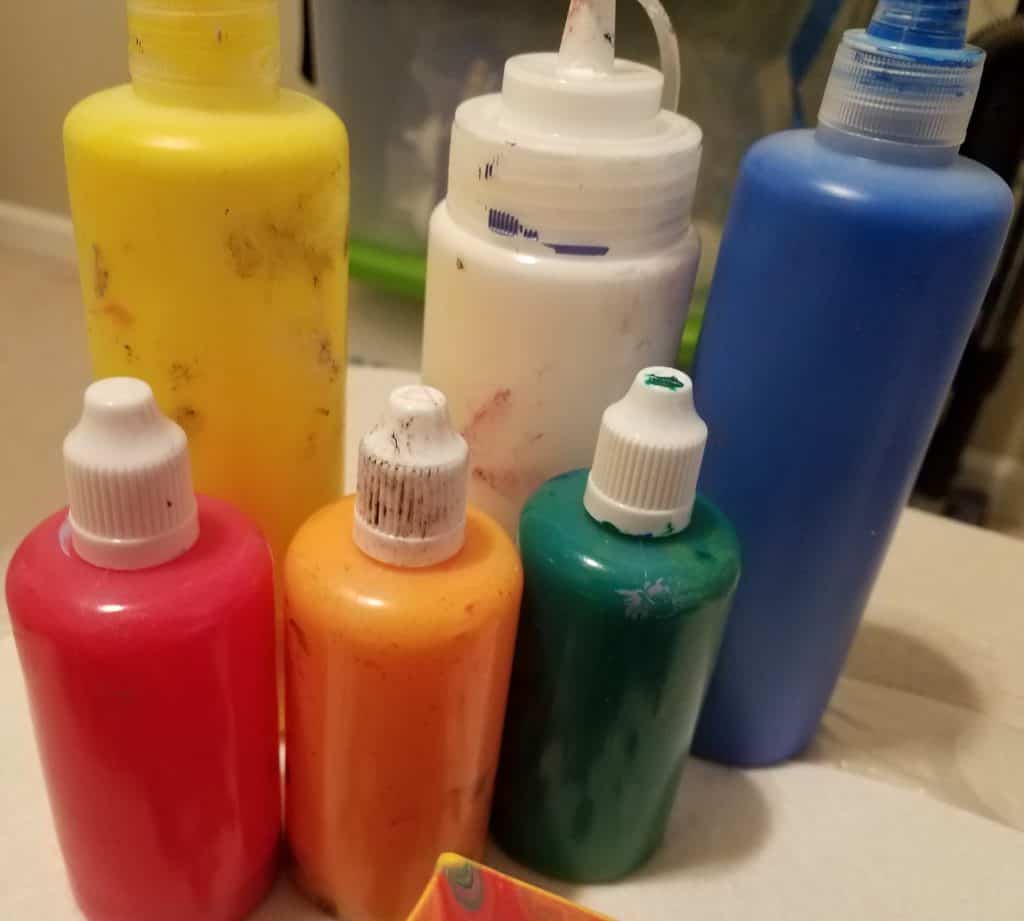
No silicone was used, and the ratio of Floetrol to paint was 3:1 for Sargent paints. The Liquitex paints were a 4:1 ratio.
Canvas Prep
The 10×20 canvas board was covered in two ounces of the Liquitex Titanium White. No silicone added.
Even though I filter the Floetrol, that doesn’t get rid of all the bubbles from having to shake it to mix well. A quick torching right before the pour will take care of those bubbles.
The Pour
Basically with the invading tree ring technique, you will think of the Burl Wood—swirl after swirl. You will not lift your pour cup during the entire pour, this in one continuous pour.
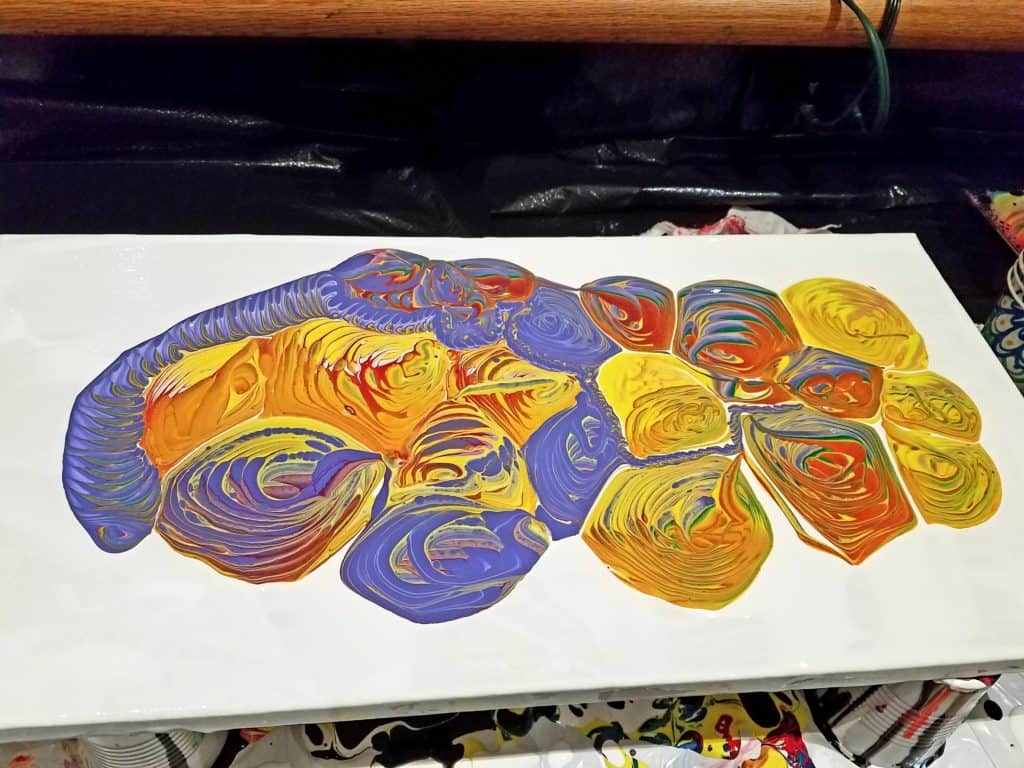
Start with one simple small tree ring, then slowly turn your attention to the edge of the tree ring by moving the ring to the edge, and then literally start another ring—moving ring center to edge of current ring—start another tree ring, repeat over and over. Never lifting your cup!
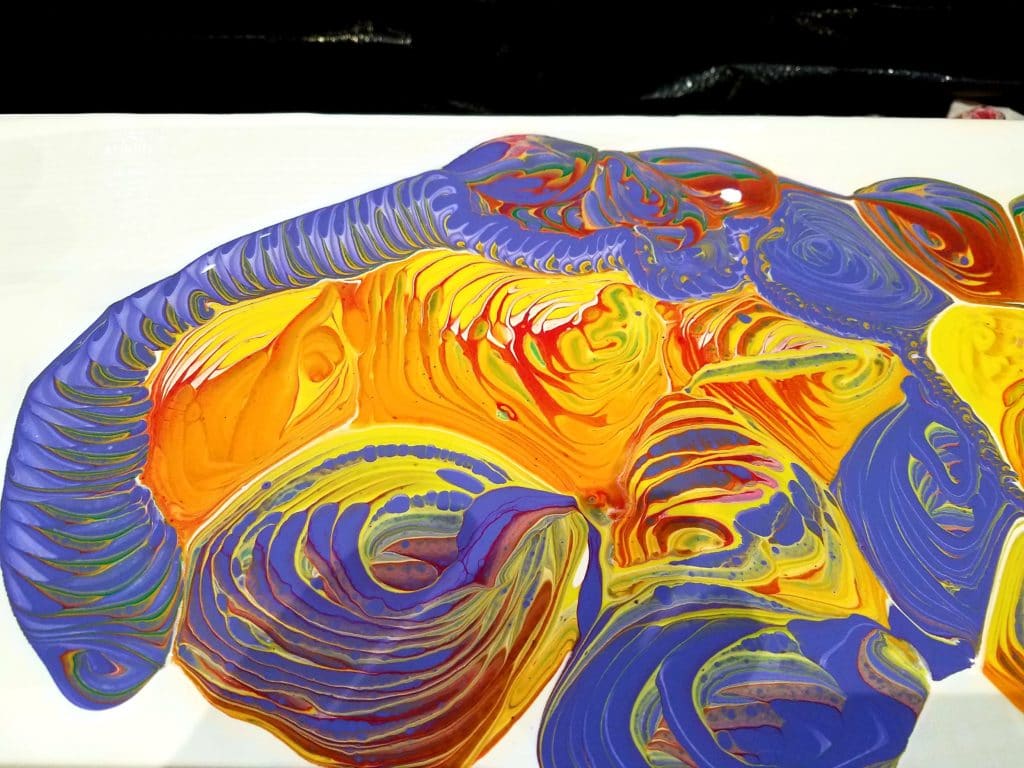
Continue to create ring within ring, on the edge of rings. When you start running out of room, you can do a few funnel rings along the edges of the previous rings. Funnel rings are where you continue to pour a tree ring, so the circular motion, but you slowly move your hand in whatever direction you want the funnel look to go.
The big difference between the invading tree ring pour and the geode pour is you never lift your pour cup in the invading tree ring, there are no separations between the rings.
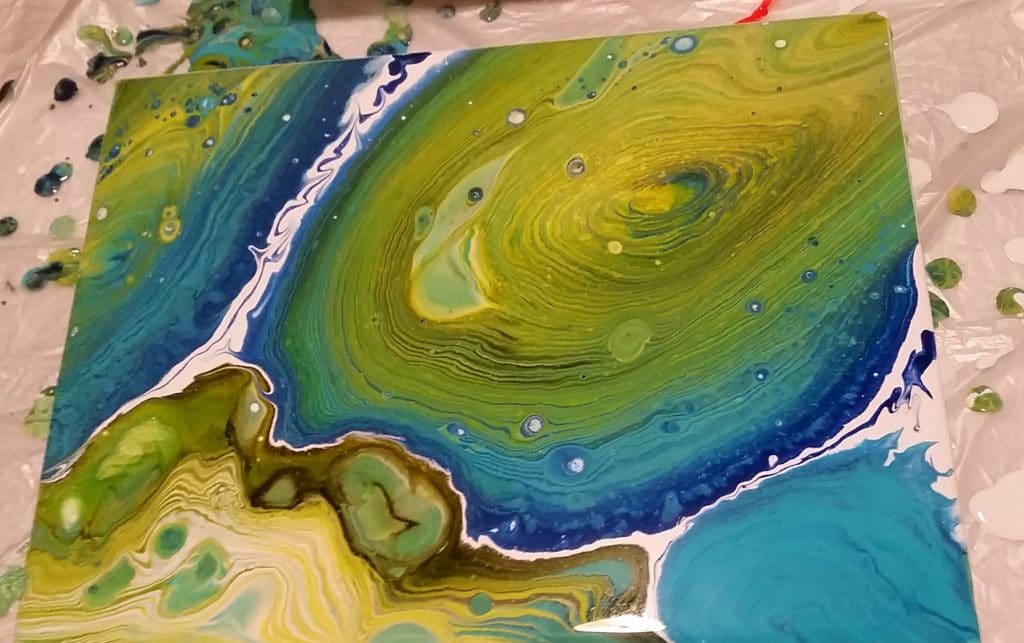
This is a geode pour with several different rings, each separated by the white as they were individual ring pours—not a continuous pour.
Not to worry if you do end up with a little base color sneak in like the white did here. As long as it’s only a small section, it will cover when you start to tilt.
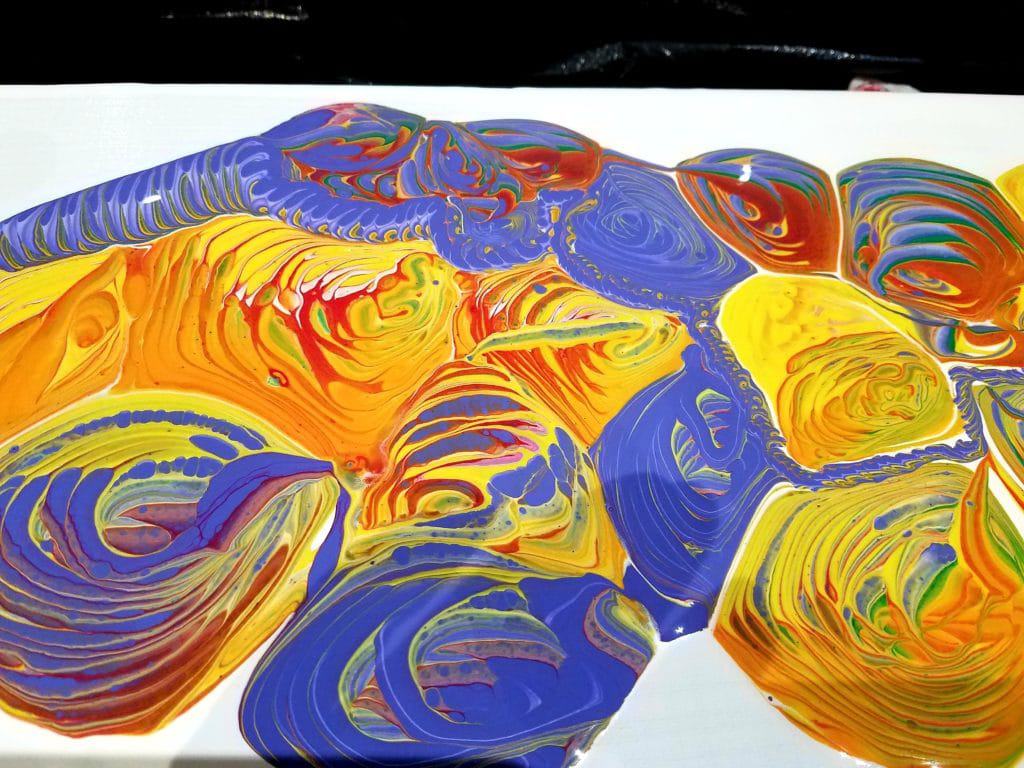
Start tilting side to side, and pay attention to where you want your color and particular rings to be your focus. Be patient with your tilting so you don’t let your favorite rings flow right off the canvas. After tilting, I did a quick torching and then let it dry.
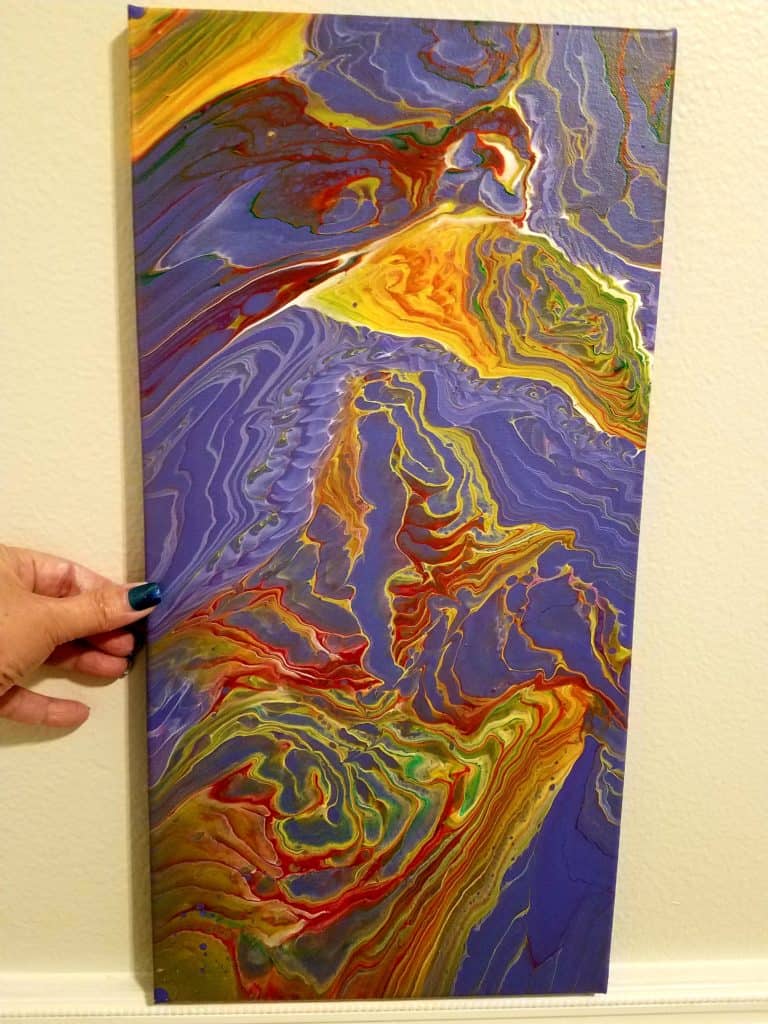
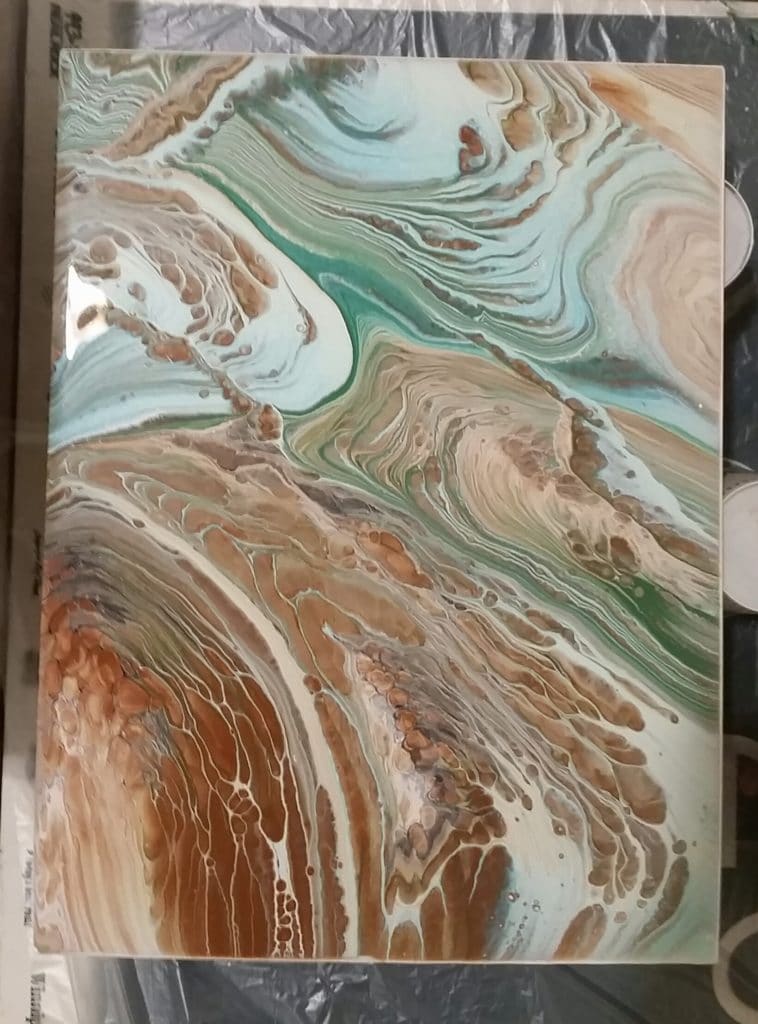
Give the invading tree ring pour a try, see what you come up with. In Part two we’ll cover the grafting technique. You’ll learn how to graft by simply adding two additional steps to the invading tree ring. Here’s a preview of grafting, be sure to read Part two!
 s
s

Since she began creating art in 2007, Tina Swearingen’s focus has evolved from repurposed conceptual art into the creativity and flow of acrylic pouring. Her pours are inspired by the movement and colors of Southern Arizona’s amazing thunderstorms, and the majestic beauty of the Pacific Northwest, which she now calls home.