
You may have heard that in order to create cells, or in order to get a good poured painting, that you need to use a balanced mix of opaque and transparent paints. Is that true? Let’s try it out and see.
Quick Links
For your convenience, here are store links to items we mentioned in this article.
- Art Alternatives Acrylic Paints
- 10 inch Economy Canvas
- Floetrol: Fortifies acrylic and latex paints to improve performance and reduce brush marks
- KY True Feel Dimethicone Oil
- Treadmill Oil
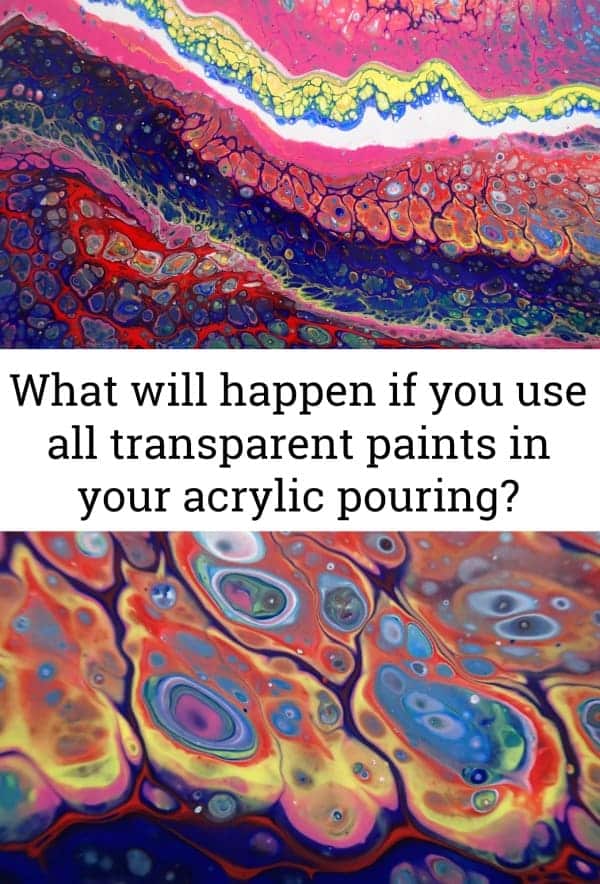
I was always such a difficult child. If I was told that you have to do things a certain way, I would always question it. Why does it have to be done that way? Are you sure that’s the best way or the only way? Have you tried it? So much is hearsay these days, so I like to challenge the established ‘rules’ and try things out for myself. Sometimes, of course, I only prove that the rule is true – but what about this one? Do we need to use a balance of opaque and transparent paints – and why?
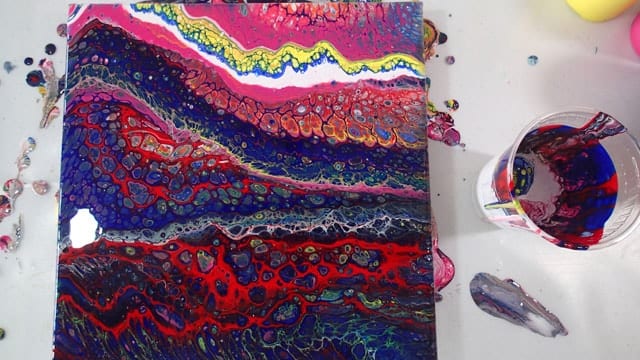
In this painting I am using:
Art Alternatives acrylic paints – all transparent except for the white
10 inch economy canvas from value pack
Floetrol
KY True Feel dimethicone oil
My paint recipe:
1 part Floetrol
2 parts paint
water as needed to get the right consistency
a couple of drops of dimethicone in the white only
some of the other pre-mixed paints may already include a few drops of treadmill oil
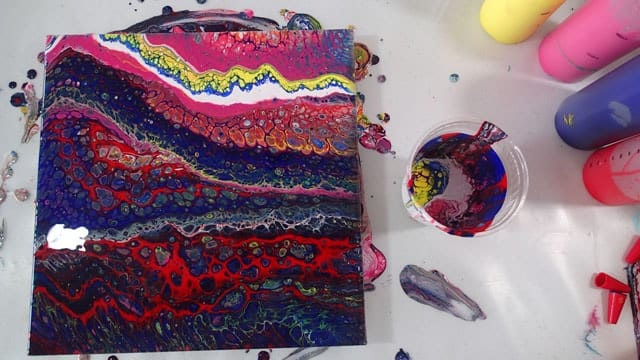
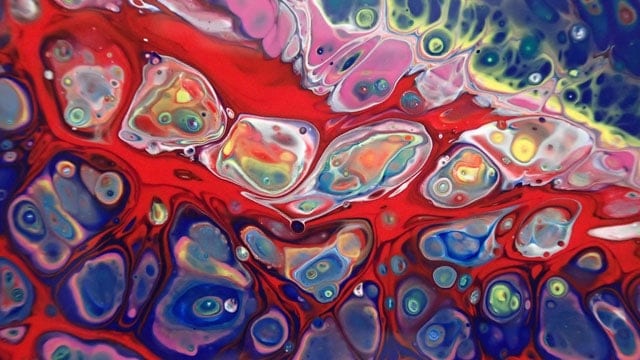
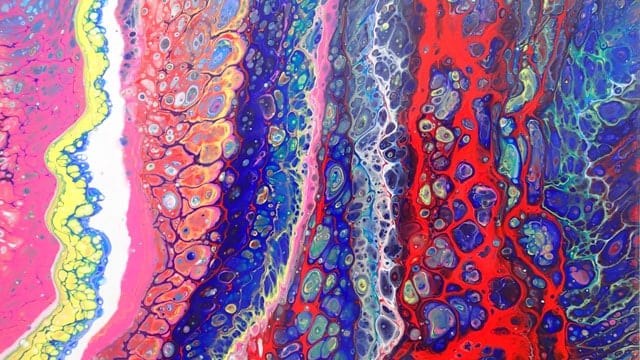
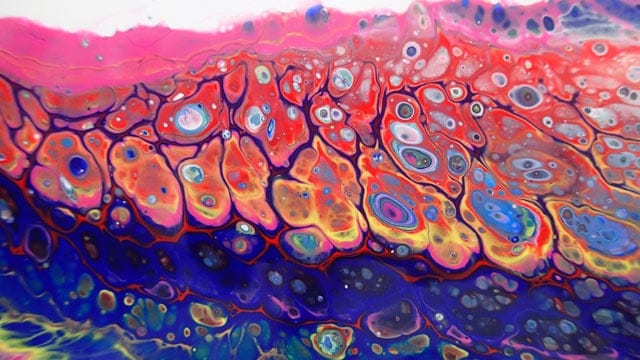
So there you have it. As we know, acrylic paints do usually dry darker than when we use them wet, and we can see that happening in my painting. But there was no great change, no big disaster that proved that using transparent paints was going to make a big mess in any way. On the contrary, I think it came out pretty well considering we had a lot of quite dark colors on there to start with! Shame about the mess up with the cloth stuck to the varnish. I learned my lesson about hanging cloths above wet paintings.
What is your experience? Do you always mix a balance of paints? Do you find it makes a difference in your paintings or in how your paint creates cells perhaps? I’d love to know more about what you have tried. Come and join us in the Facebook group to chat.
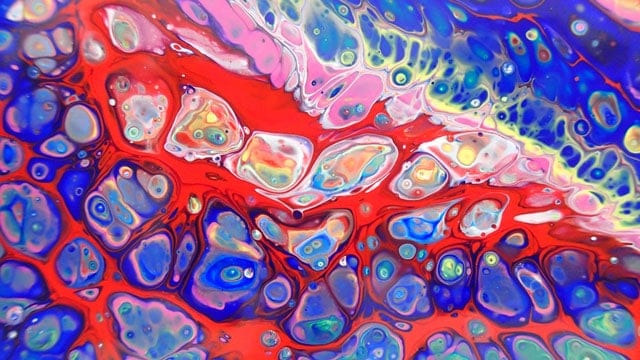
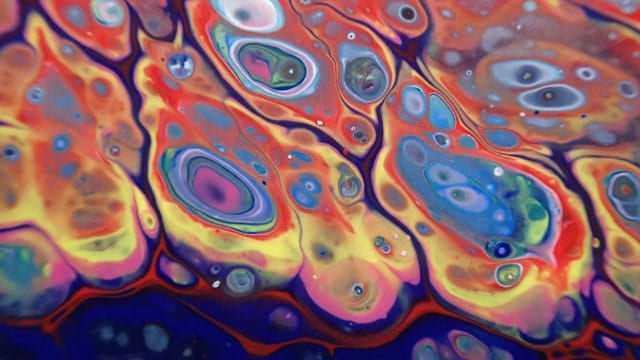
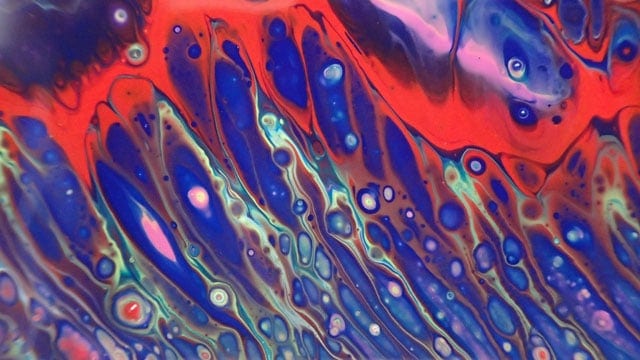
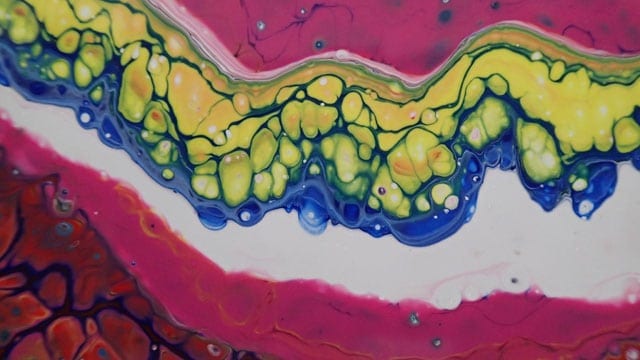
As usual, here is the slideshow of the picture for this painting, both wet and dry, and closeups of the details. Enjoy 🙂

After being told in high school that she was so bad at art that she should switch to another subject, Deby didn’t paint again for 35 years. Then a stroke released a new wave of creativity and she began exploring with dot painting, abstract and eventually acrylic pouring, and at last the joy of working with color returned. You don’t need ‘talent’ to be an acrylic pouring artist – just enthusiasm, some basic instruction, and a willingness to try, fail and try again. Paint along with her and learn from her many mistakes, and you’ll soon make great art together.