
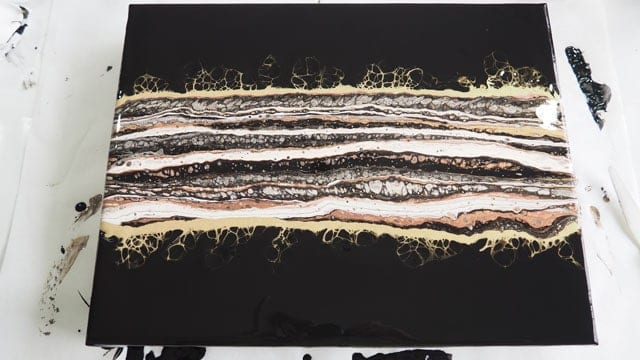
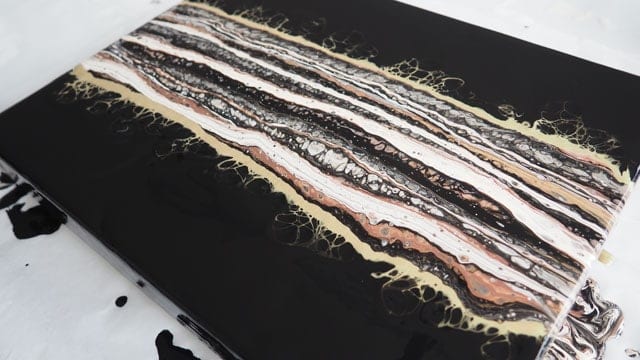
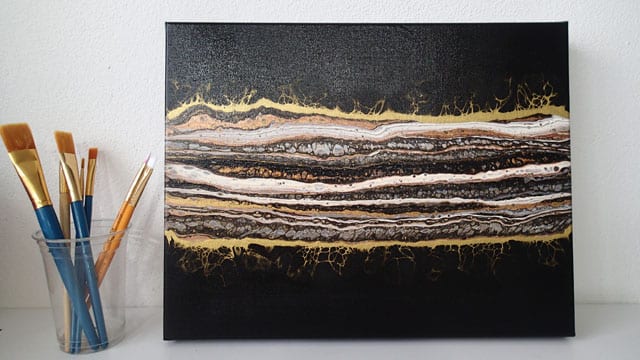
I’m still in the mood to be working with metallics and glitter paints, but because THIS PAINTING turned out so lovely with the bright metallic swipe against the negative space, I’m thinking I would like to try that again. This time using the dirty pour technique instead of a swipe.

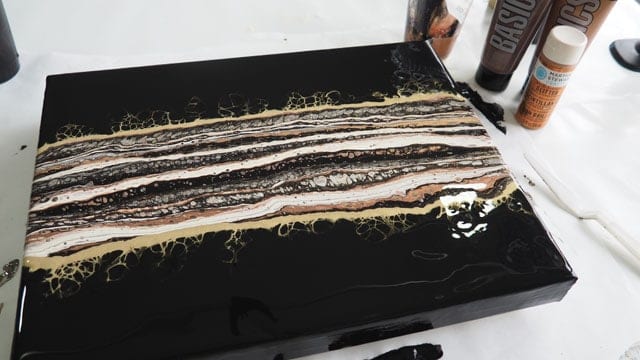
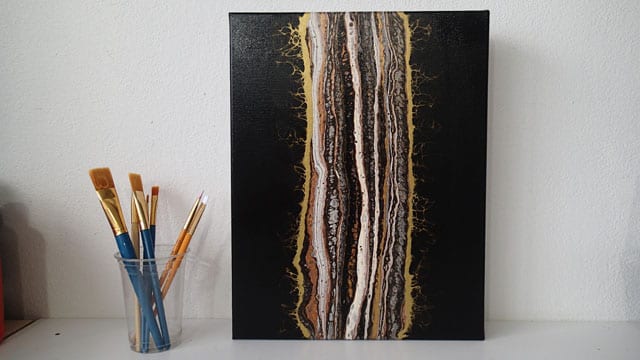
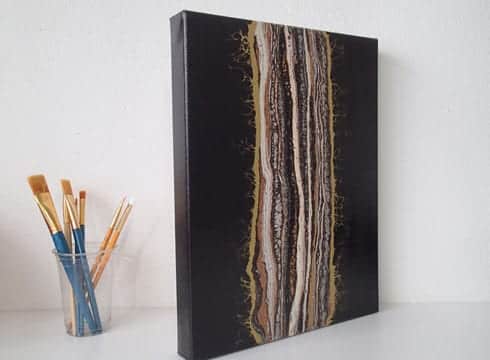
I am going to try to confine my dirty pour to (about) the center third of my canvas using lines of metallic gold, and pour in the middle. I’ll use the dirty pour to create striped lines and make sure to get in plenty of shine, sparkle an glitter to contrast with the stark black.
Materials used in this painting:
Art Alternatives acrylics in titanium white and gold
Blick Student Acrylics in black and yellow ochre
Floetrol
Treadmill belt silicone oil
Canvas or a nice gallery wrapped canvas
8oz squeeze bottles
4oz cups with lids
Martha Stewart glitter acrylic in Fire Opal
Liquitex Basics paints in copper and bronze
Polycrylic gloss protective finish
Recipe for this painting:
All paints were mixed approx 2 parts paint, 1 part Floetrol plus water as needed to consistency. A couple of drops of the silicone oil in each color except the background black
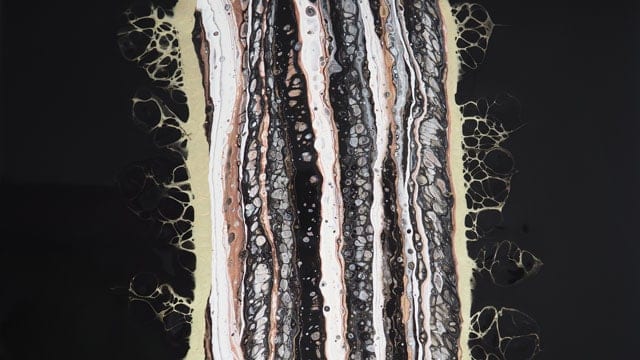
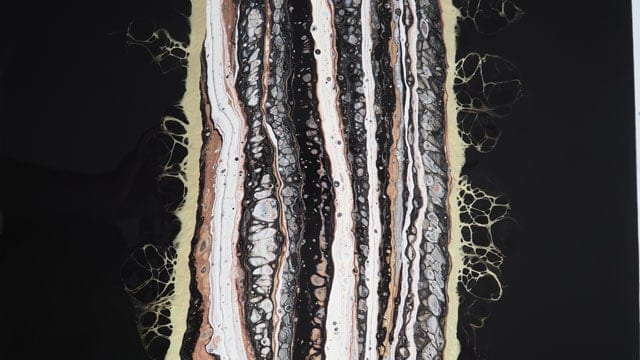
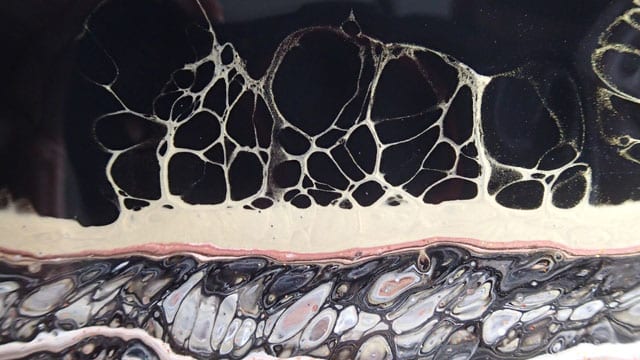
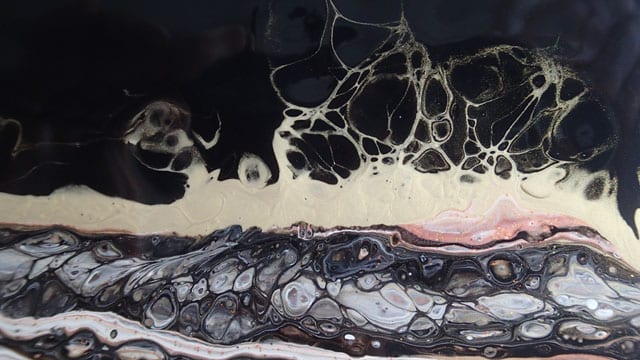
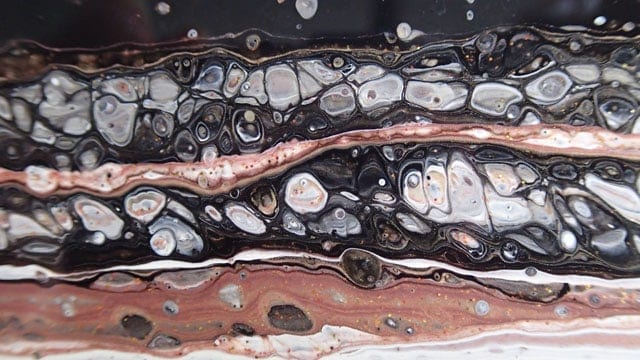
Wow, that turned out even better than I expected. The metallics are awesome, the cells and striped design are just what I was looking for and the colors look elegant and sophisticated. I can see a piece like this being more commerical, more admired by non-pouring artists perhaps, and more likely to fit into the decor and color scheme of a lot of homes. More so than my usual very bright colors perhaps. Plus, I enjoyed doing it for a change so everyone is happy!
This one is for sale in my Etsy store here.
As usual, here is a slideshow of photos of this pour, both wet and dry, and close-ups of the details.
Frequently Asked Questions About Metallic Dirty Pour
1. What is a metallic dirty pour with black negative space?
It’s a technique where metallic paints are mixed and poured with a dominance of black, leaving negative spaces, creating an elegant and sophisticated effect.
2. Can I use any type of metallic paint?
Yes, but results might vary. It’s advised to experiment with different brands to find the one that suits your preference.
3. How to achieve the black negative space?
By controlling the amount and location of the poured black paint, you can manipulate the negative spaces in your piece.
4. Can this technique be used on various surfaces?
Absolutely, but the prep work may vary depending on the chosen surface.
5. Do I need a special medium for metallic paints?
Regular pouring mediums usually work, but experimenting is key to find what works best for your style.
6. How long does it take for this type of pour to dry?
It generally takes 24-72 hours, but thicker pours may take longer.
7. How to seal a metallic dirty pour?
Use a clear, non-yellowing sealant to maintain the vibrancy and sheen of the metallic paints.

After being told in high school that she was so bad at art that she should switch to another subject, Deby didn’t paint again for 35 years. Then a stroke released a new wave of creativity and she began exploring with dot painting, abstract and eventually acrylic pouring, and at last the joy of working with color returned. You don’t need ‘talent’ to be an acrylic pouring artist – just enthusiasm, some basic instruction, and a willingness to try, fail and try again. Paint along with her and learn from her many mistakes, and you’ll soon make great art together.