
Lumps, bumps and clumps—sounds like a medical show. What causes these in our poured paintings and how can you avoid them in the future? Most of the time they are easy to predict and avoid. Here we are going to troubleshoot the reasons and provide tips on how to avoid them in the future.
Floetrol
First culprit is Floetrol. You will need to strain the Floetrol prior to adding it to your paint. This picture demonstrates why.
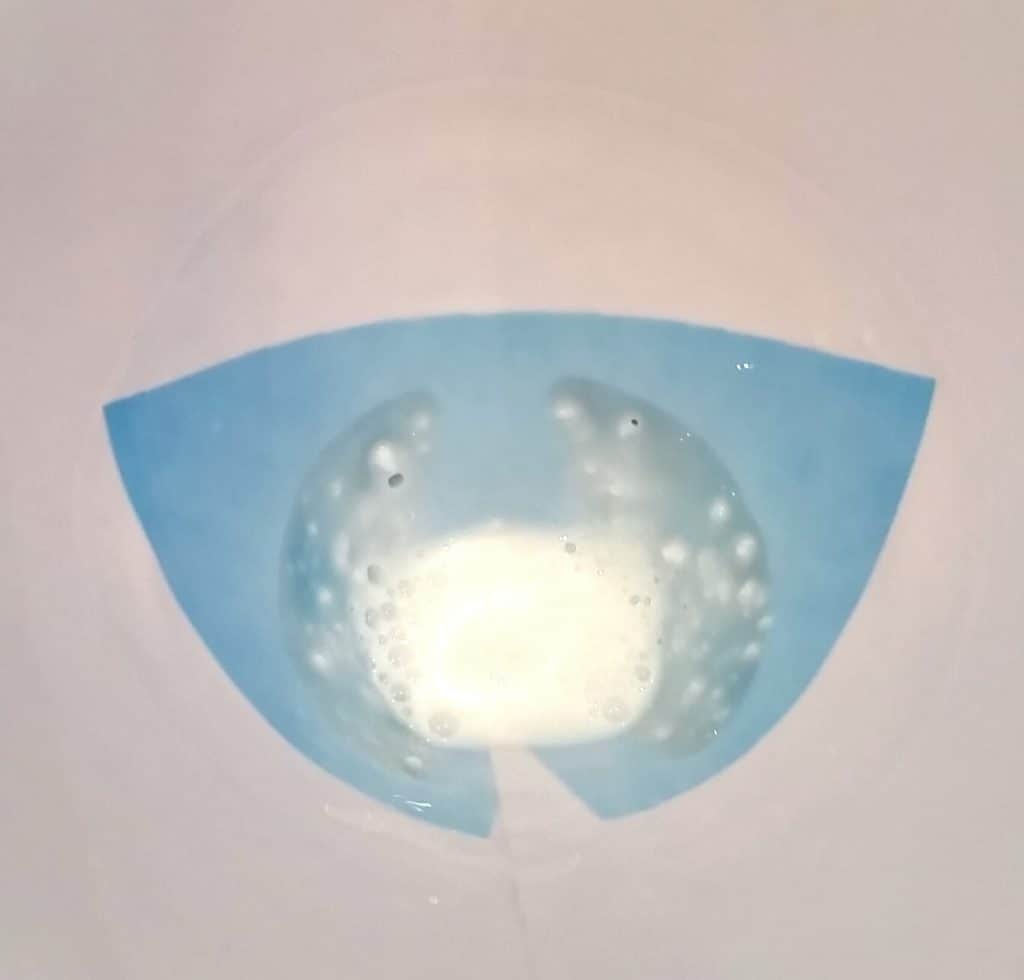
I use a disposable paint strainer every time I use Floetrol as it normally will have these lumps in it that will go directly onto your canvas if you don’t stain first. It’s easy to do and prevents the nasty surprise of lumps in an otherwise beautifully smooth surface.
Unmixed Paint
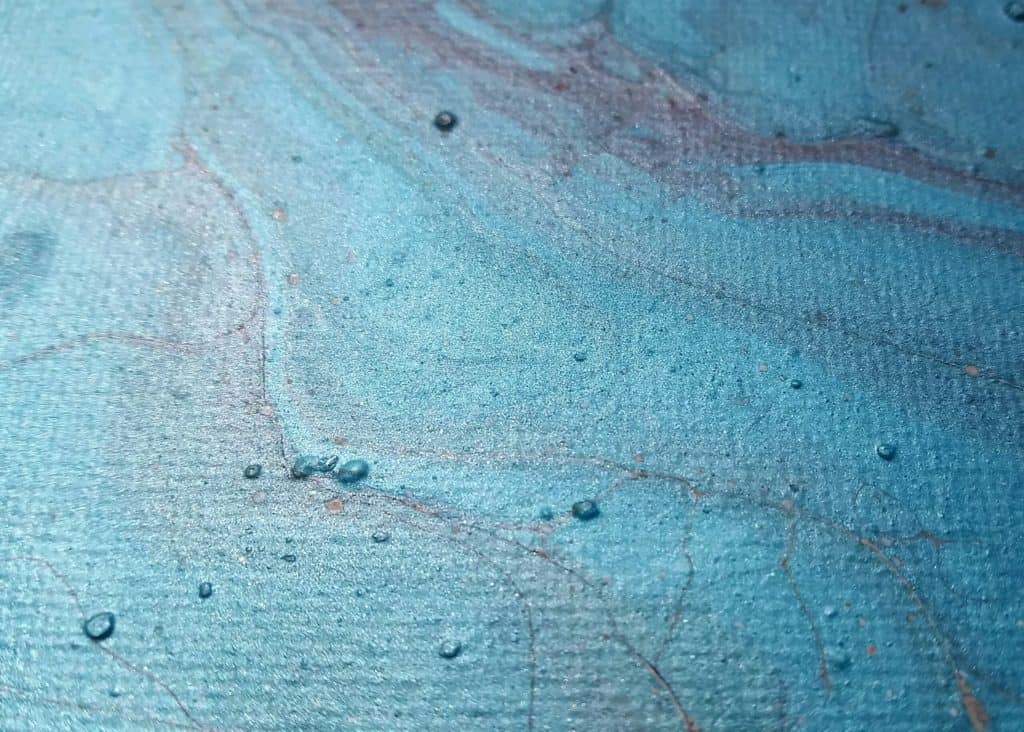
You have strained the Floetrol and you see hard lumps under the surface that don’t smooth out or pop with a torch. These are likely to be unmixed paint. Especially if you are using a thicker paint and trying to mix it in with a medium. Try this next time: pour a little medium in the cup first and then add your paint. Mix this with a stir stick by smashing it up against the sides of the cup. Once you are comfortable that all clumps are gone, continue adding medium to desired consistency.
Dust or Floaters in the Air
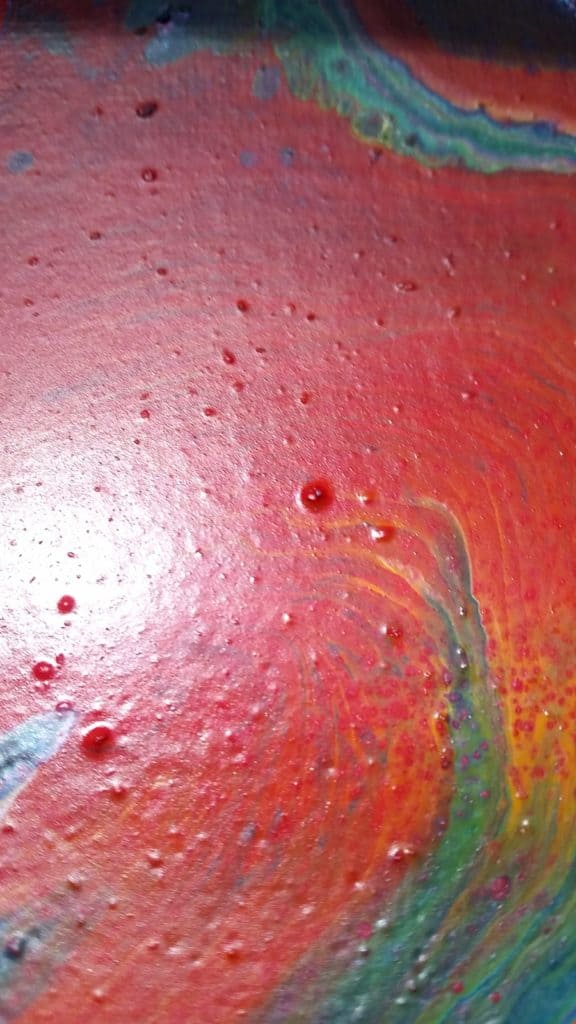
This picture shows a combination of lumps, bumps, and clumps. A sign that I was really lazy that night. I didn’t wipe off the canvas prior to painting, so who knows what pieces of dust, lint or other floaters were under there. I got the canvas out of the closet, it hadn’t been covered by anything and I’m not sure how long it had been sitting up there. So, to avoid this, be sure to wipe off your canvas with a barely damp soft cloth to remove all dust, lint, hair or anything else that might have settled on it, even if just sitting uncovered overnight. This ugly result was the accumulation of all the floater and my laziness to clean it off first. The next morning it was tossed, no way to save it.
Paint is Too Thick
Ever have a painting look great until it starts to dry then you realize there are the long waves of thickened paint or larger clumps that you can’t explain?
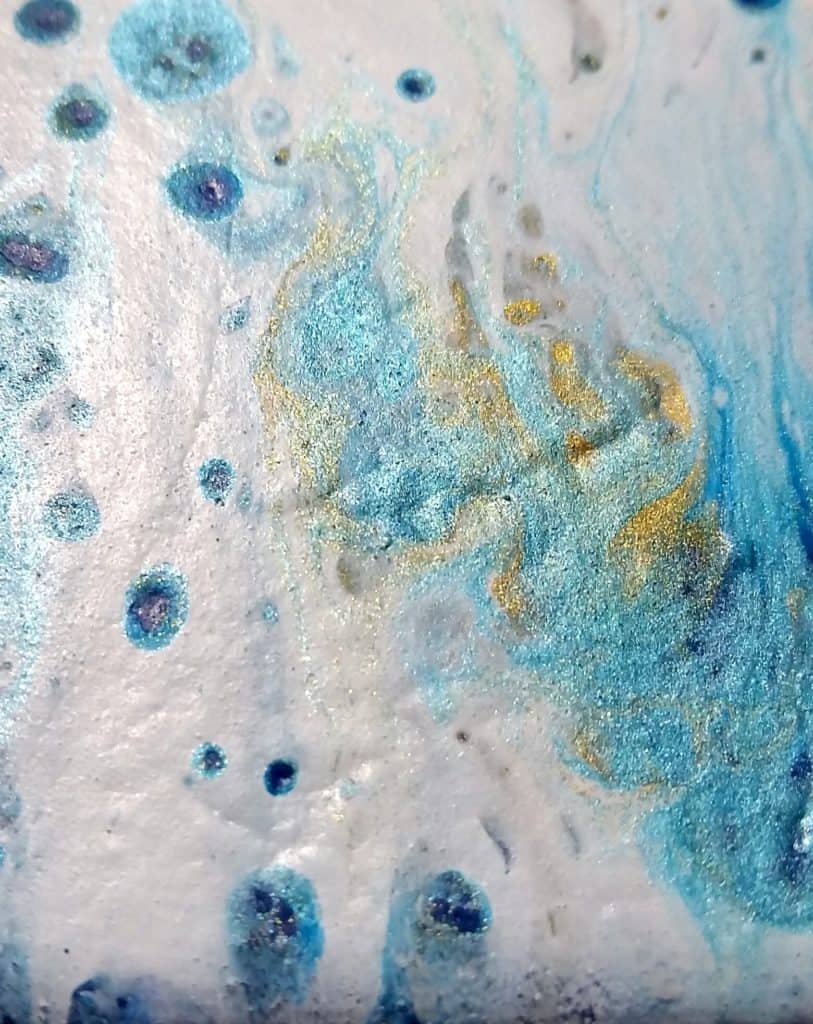
In this picture you can see what it might look like when dried, this was from one or more of the paints being too thick. Be sure you test the consistency of the paint prior to adding to your pour cup or pouring directly on the canvas. The paint in the cup when drizzled off the end of your stir stick should be smooth with the paint in the cup. If the paint drizzle sinks into the paint, its too thin; if it forms a mound, its too thick. Adjust your mix accordingly.
This includes your base layer. Don’t be fooled by thinking the base coat can be thicker as long as the rest of your pour is the right consistency. That’s what happened here. The white base coat was too thick and as the poured paint tried to flow over the top, it ended up pushing rather than flowing, creating the thickening globs as it dried.
Paint is Too Thin
So, you have a nice consistency on all paint except one which just might be a little thin. Can that cause problems?
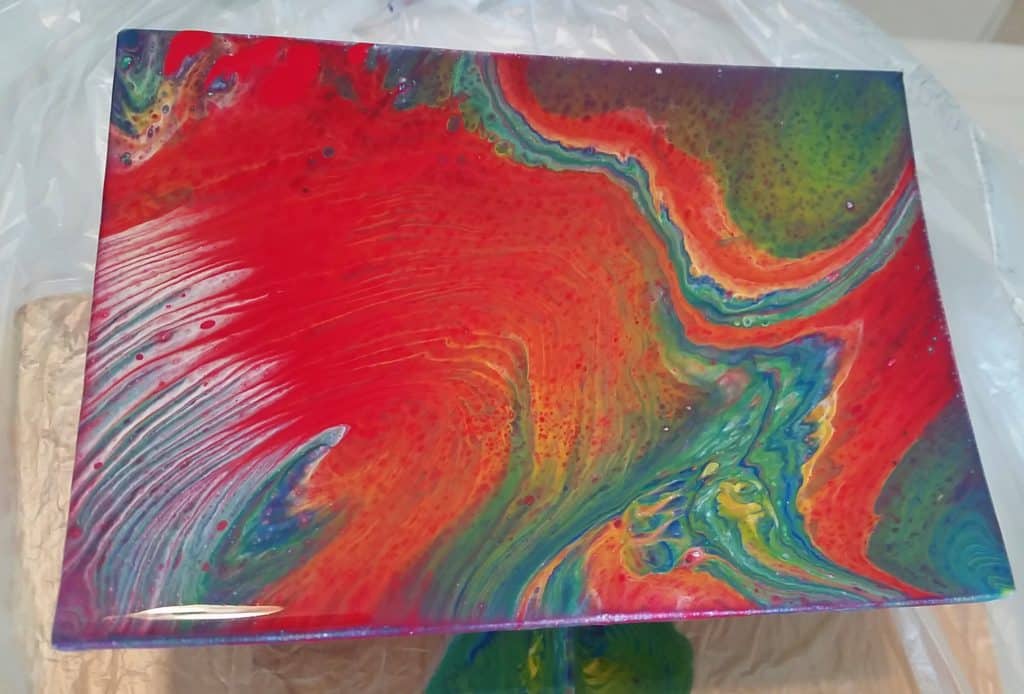
Yes of course. Here you can see the red paint was too thin and although in some areas it did fine, others like the edge it almost disappeared under the white and the same with the yellow in the middle. The spots shown, and not covering over a base layer are telltale signs of paint that is too thin.
Refer to consistency in paragraph above related to how to mix the correct paint consistency.
Silicone/Cells
You added silicone but the cells are so tiny it doesn’t look right or it’s just not what you wanted or expected. Why?
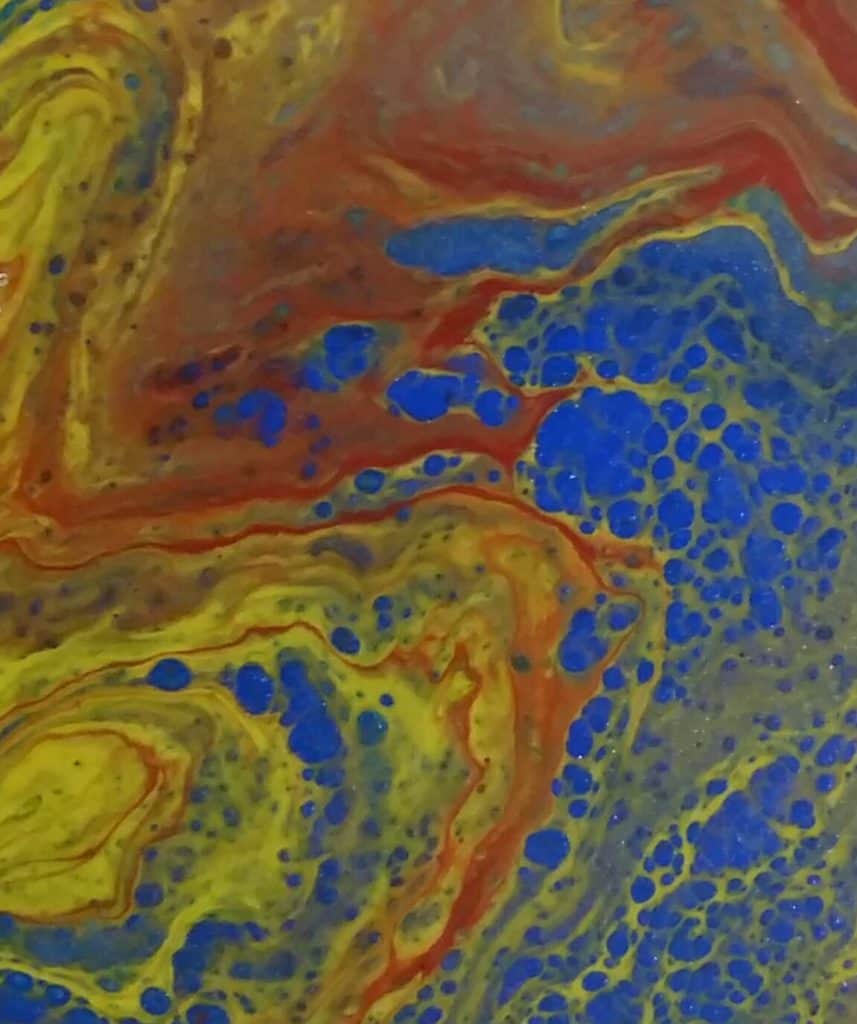
Silicone is a great additive to use to create cells, but it too must be handled with care. Here you can see tiny cells that just look like messy soap bubbles. This was the result of mixing too much. If you use a thin silicone like treadmill oil, you should only stir the silicone/paint mix three to four times, otherwise you will break down the silicone causing these tiny results. If you use coconut oil, you can stir six to eight times as it is a thicker silicone and will not break down as easily.
Colors are Muted or Muddied When Dried
You have carefully chosen your colors for your pour, and everything goes great—until it dried. Then you notice it is blah, the colors don’t pop and the contrast that was there in the wet pour has totally faded. Why?
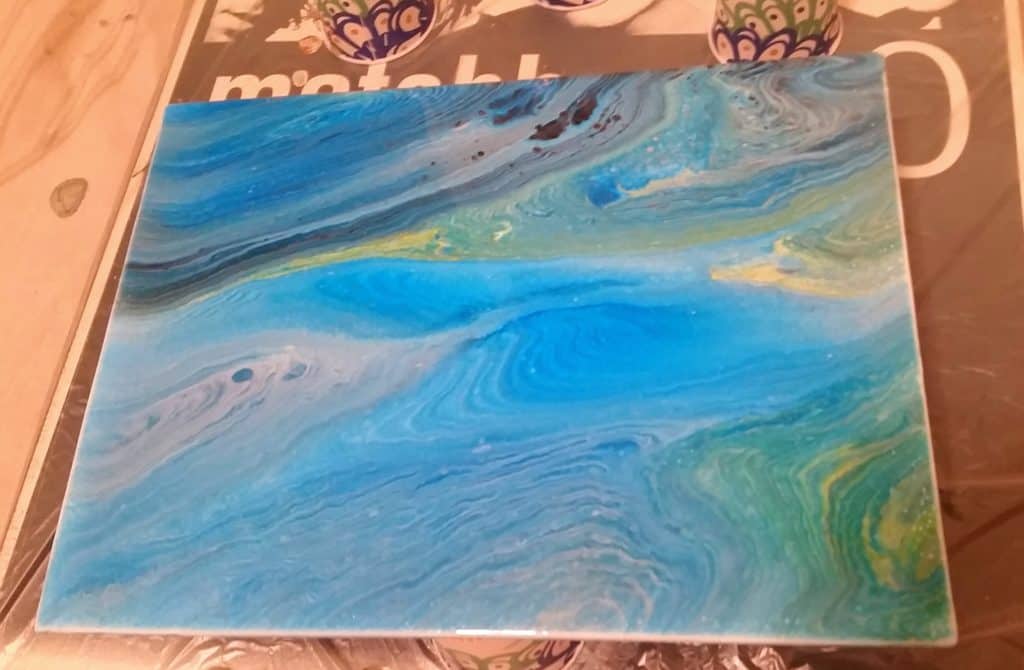
Well there are several reasons why this may be.
1: The colors are too close in shades or hues to each other—basically not enough contrast to begin with.
2: You may have used too much of one color vs. spreading out the colors in layers.
3: As was the case in this blue pour, I used a light gray as my base. When you use a color other than white as your base when pouring light colors, you will have a more subtle or even muddy result. Here the gray base gave the medium blue a lighter greyish blue tone, and almost over powered the yellow.

While this in no way encompasses all paint pouring issues I hope these have helped and given you some ideas of what to look for; and how to avoid some of the most common mistakes with paint pouring. I believe that everyone makes mistakes and needs a hand from time to time, and as fellow artists we need to be the one who lends it. Take care and never stop asking questions.

Since she began creating art in 2007, Tina Swearingen’s focus has evolved from repurposed conceptual art into the creativity and flow of acrylic pouring. Her pours are inspired by the movement and colors of Southern Arizona’s amazing thunderstorms, and the majestic beauty of the Pacific Northwest, which she now calls home.