
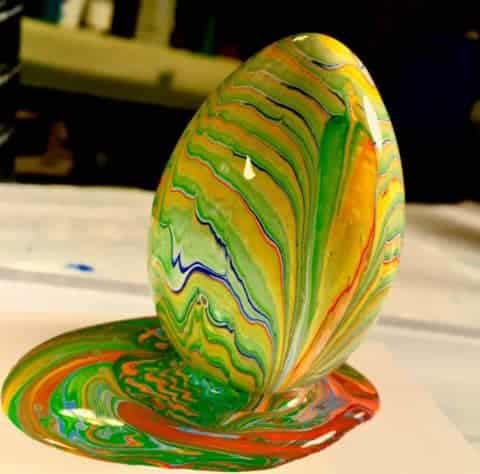
Dyeing Easter eggs is so last year! Acrylic paint pouring is the new trend that can be applied to many different areas of our life, including the holidays! An Easter egg is the perfect vehicle for the dynamic fluid art that is acrylic pouring, so read on for how to create your own just in time for the April 1 holiday.
Supplies I Used
Blank white unpainted Easter eggs
Metallic easter eggs
Floetrol
Colorants set
DecoArt acrylic paints
Adhesive putty
To prepare, I tested several different types of paint and several types of plastic Easter eggs to paint on. There are many different varieties of surfaces and shapes, including the regular plastic eggs we all know, and the ones that have metallic and shiny surfaces. Since they are already finished with a color, if your paint doesn’t cover it completely it still looks good. The original color just shines through.
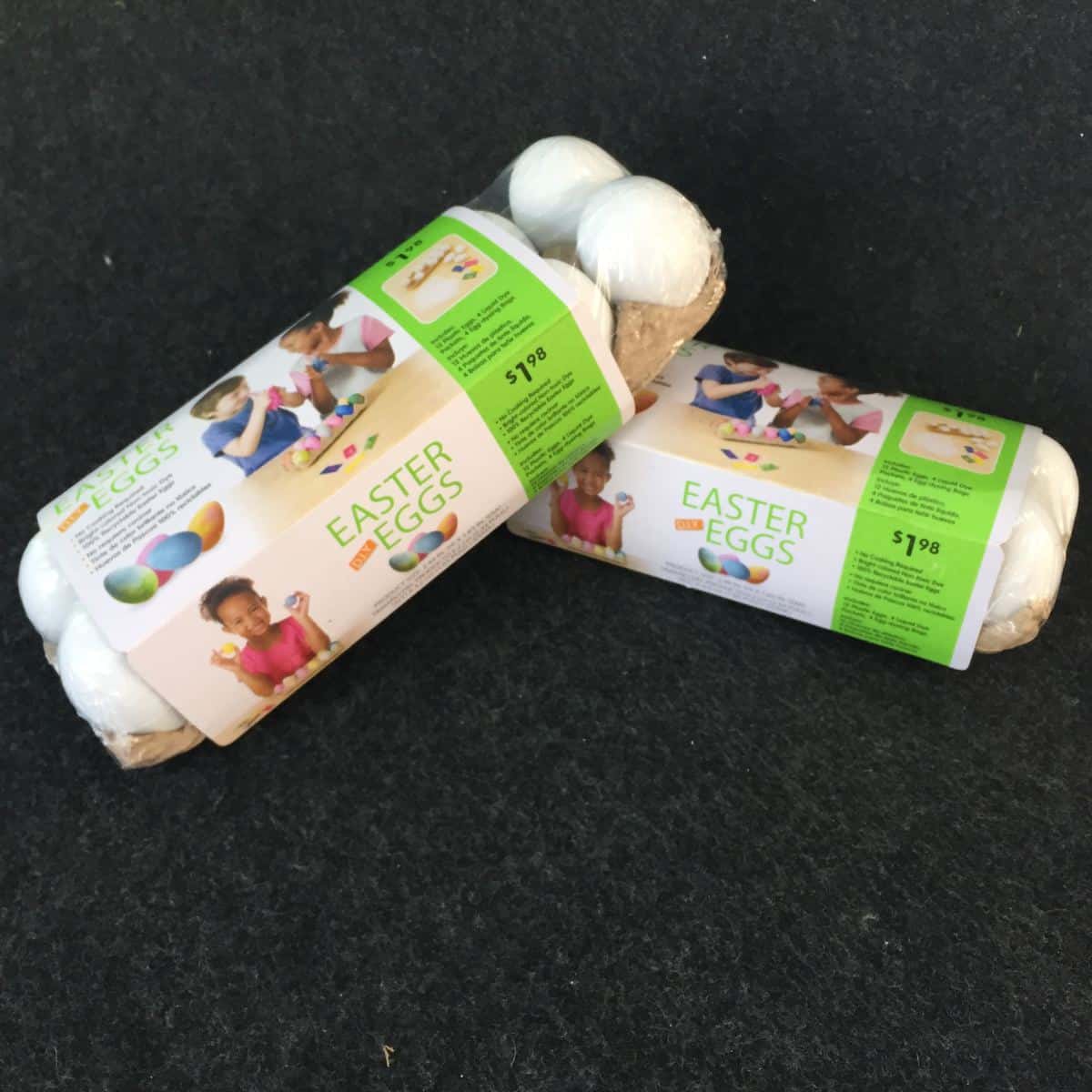
I got the best results from using a paintable plastic Easter egg. These are inexpensive: Only $2 a dozen at Walmart in the US. They have a “chalky” feel and a matte surface, so the paint adheres very well.
After choosing your eggs, next decide which pouring technique you would like to use. If you have been following this art phenomenon, you will have noticed a new approach is created nearly every day! Clean pour, puddle pour, dirty pour, flip, dip, smash, swipe… the list goes on.
Last year, Deby Coles dubbed me the “King of Swipes,” which was a big boon for my social media influence. Thanks, Deby! Despite my rep, for my eggs I decided on a “swirling dirty pour,” also called a “tree pour.”
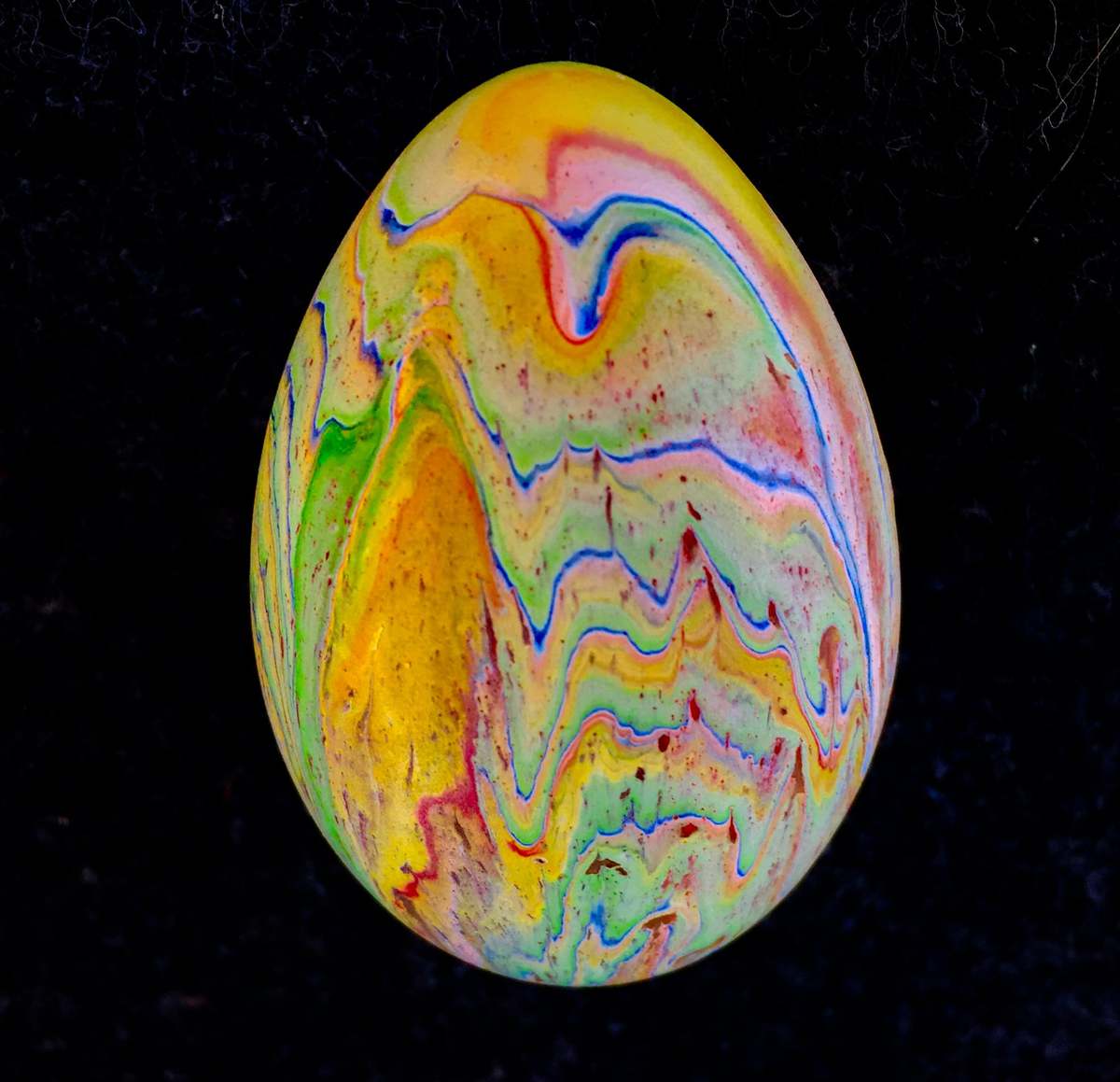
I have a video on my YouTube channel in which I paint a piece of wood with this technique. Using different colors of Flow Mix (see my recipe below) together in a small cup, I poured over a wooden cutting board in a small, tight, continuous swirl in the center. With this technique, the paint pushes the rings you are creating out and toward the edges. It ends up looking like the beautiful rings of a tree.
To create my paint mix for the Easter eggs, I chose to use traditional pastels and some bright colors, combined with my usual flow mix:
Casey’s Flow Mix Recipe
3 parts Floetrol
3 parts acrylic paint
1 part water
(Floetrol is a paint conditioner and extender available in hardware stores and on Amazon [https://www.amazon.com/FLOOD-PPG-FLD6-04-Floetrol-Additive/dp/B000C029PM/ref=as_li_ss_tl?ie=UTF8&linkCode=sl1&tag=artcrnm-20&linkId=7934fa5b24e4fe1a8993c9cd42c31bab]. It’s an old product that professional housepainters have used to extend the paint coverage and create a workable drying time.)

My usual mix works consistently well. However, I recently discovered something new for pouring: tinted medium. Using Floetrol and colorant (the substance that the computerized machine at the paint store squirts into customized paint to make it the color you want) creates a bright transparent “paint” that “cells up” beautifully without oils (like silicone) that you have to clean off before varnishing.
Casey’s Tinted Medium Recipe
10 to 20 parts Floetrol
1 part colorant
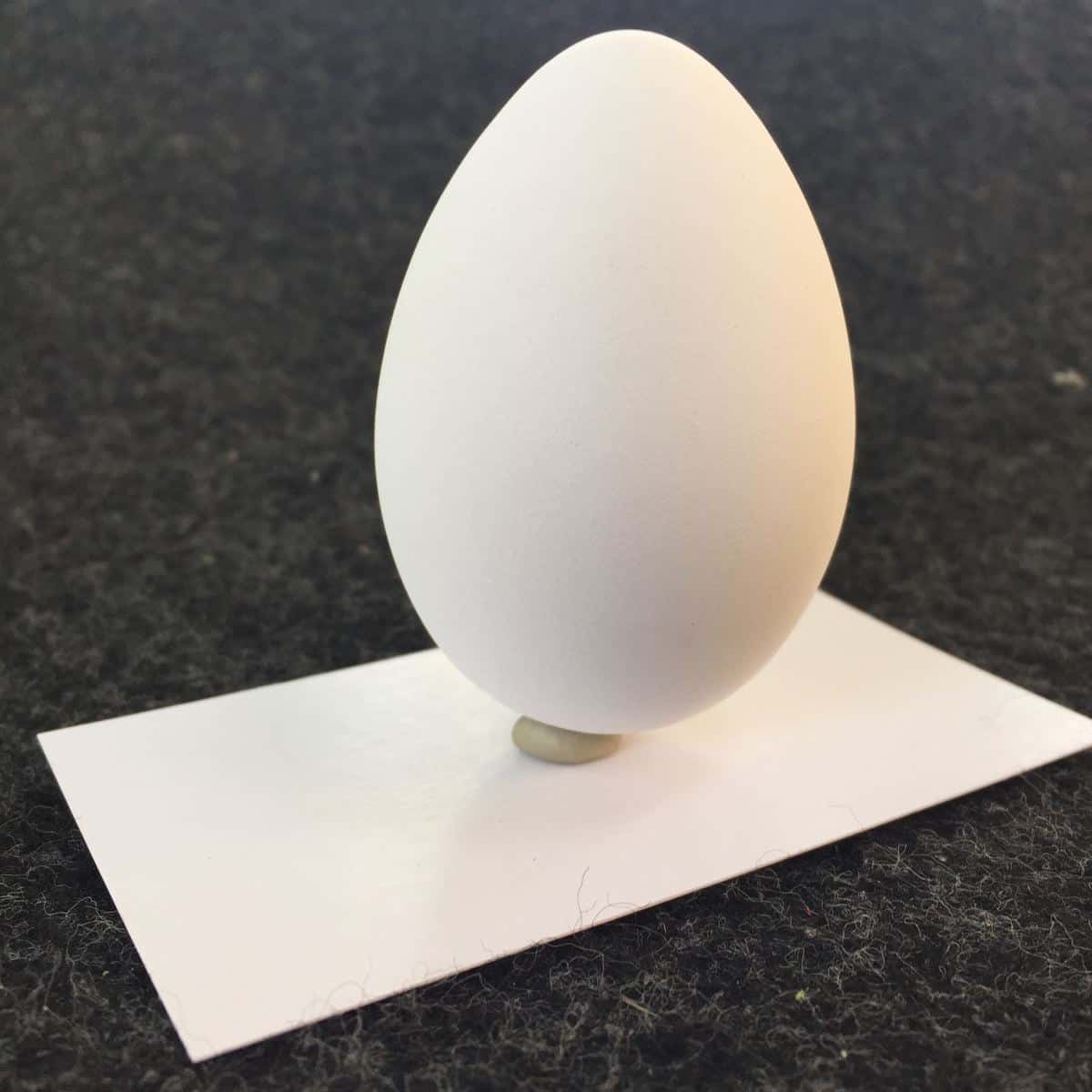
I used a small amount of adhesive putty to stick the egg onto a business card. This not only kept it upright during the pour and drying process, but also gave me a means to pick it up and tilt the egg. On a three-dimensional object like the egg, you pour at the top and allow the rings to run down the sides.
In the video, the paint covered the egg well. Don’t worry about getting your rings perfect. It creates more interesting effects when your swirling action is imperfect, like if a little paint drops on one side, or if your swirl is uneven so that it creates a “wave” on one side that isn’t on the other.
So, what’s your approach to your Easter eggs this year? I would love hear what techniques and materials you decide on. Feel free to leave questions in the comments, too!

Casey Cole Corbin has been selling and teaching fluid art for years. He offers coaching if you would like to learn how to climb up the 5 Steps Success Path to becoming a profitable fluid art teaching business owner through his membership program. You can also join his free Teachers group and if you want to learn to sell your fluid art join his free What’s Selling group. You can also join his free training group.