
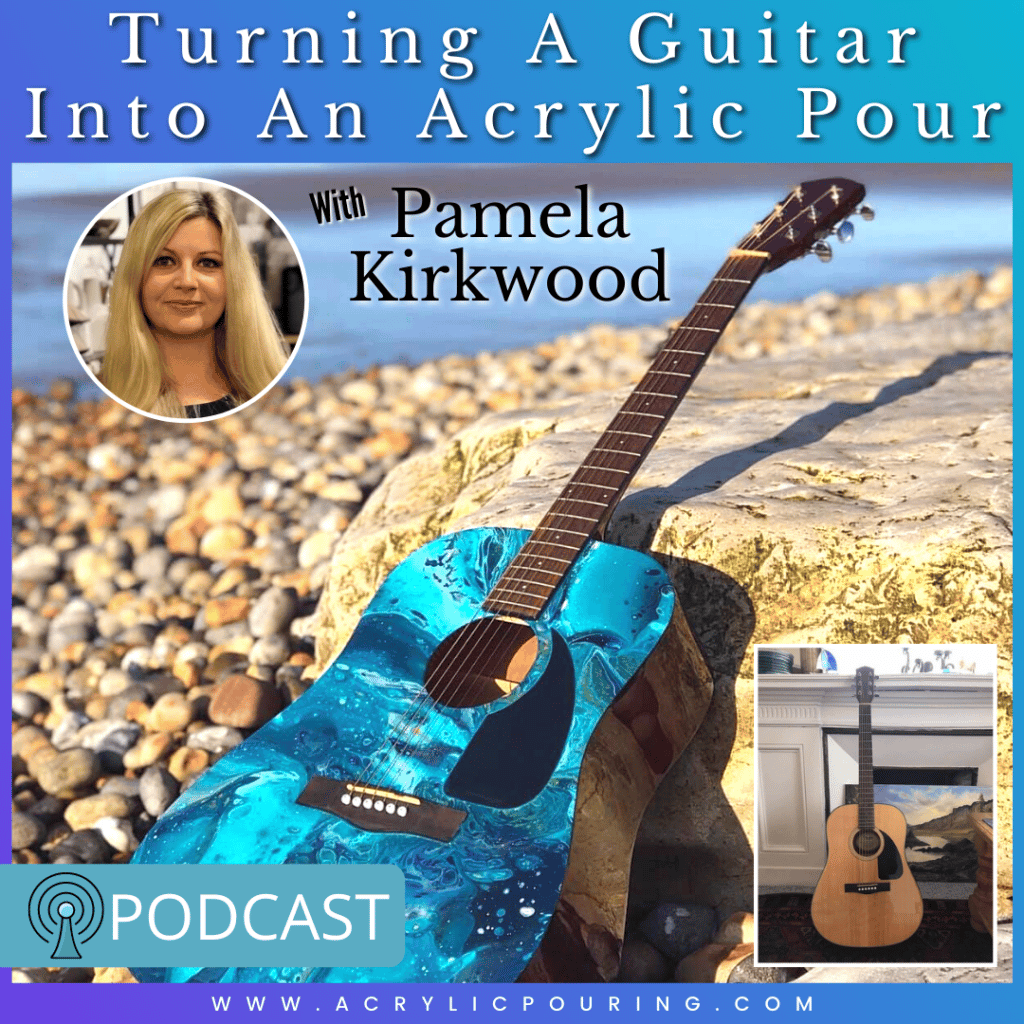
Art is everywhere and it depends mostly on your creativity. In this week’s episode of the Fluid Arts Podcast, you’re going to meet Pamela Kirkwood, an artist that has explored one of many acrylic pouring ideas by transforming her second hand guitar into something completely different.
Given to her as a gift from her father, Pamela’s idea not only became a reality but we consider this wonderful work of art “an experiment gone right!” After today’s episode you will know more about who she is and how to replicate this process if tempted to take on the challenge.
Meeting Pamela Kirkwood

Pamela is a British artist who lives in Hastings England, a small city right on the south coast on the beach. She has been painting for about two years, and before that, drawing was one of her main hobbies.
During today’s discussion, Pamela mentions other creative fluid art projects that she has tried as well as the main component they all share. She believes this fluid art style encourages her and other artists to let go of the creative pressure that can easily come with many other painting techniques. They’re so many nice acrylic pour ideas out there and that’s why there she encourages listeners to try out some of these different surfaces (including a guitar if you can find one!)
The Inspiration Behind Her Work of Art
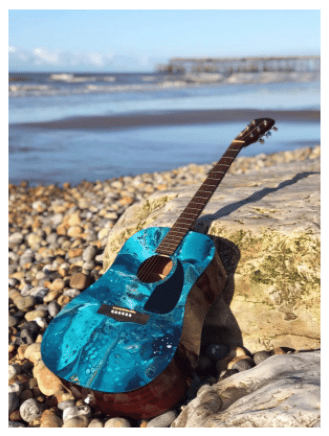
The inspiration behind Pamela’s guitar was the nearby beach where she lives. She mentioned, “I was living near the ocean and I just love blues. The gold is like the sand”.
Acrylic Pour Ideas: The Guitar Creation Process
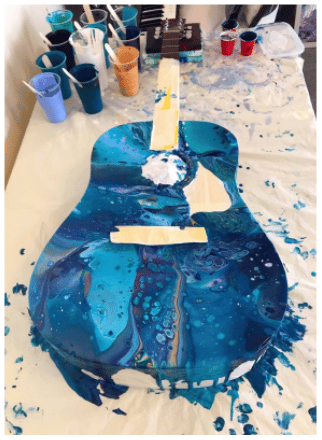
According to Pamela, the entire creation process of the guitar took around 15 hours.
Here are some of the steps:
- 1) Remove the strings from the guitar.
- 2) Use painter’s and masking tape to protect areas that will not be painted.
- 3) Sand varnish off the guitar, then prime it using a wood primer.
- 4) Mix paint with floetrol and silicone oil to get really nice cells. Make sure you measure these properly for the right consistency.
Do not forget to use tapes and plastic bags to protect the parts of the guitar that will not be painted. After that, follow the steps below:
- 5) Place the guitar on a level surface to prevent paint and resin from dripping off the sides.
- 6) Add your paint to the guitar. Tilt as desired until satisfied with the results.
- 7) Pour the resin. After about 20 minutes, go over it very quickly with a heat gun to remove bubbles.
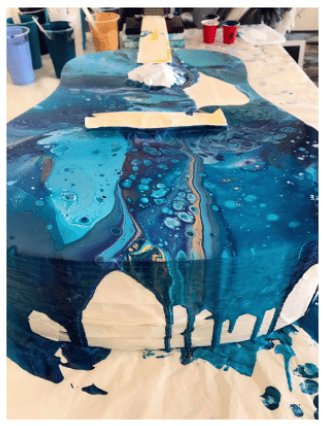
Materials Used
Pamela used the following materials in her guitar:
- A level
- Painters tape
- Masking Tape
- Paint
- Resin
Tips for Beginners
“The best tip for people who try acrylic pouring ideas (like this one) for the first time is to take your time. It’s important not to rush, wait until you’ve got a bit of time to sit and create, and when you do things calmly the result is more likely to turn out better.
If you have any doubts and want to know more about Pamela’s work, check out her Instagram page “quantum moods” where you can find many of her process videos. Her Facebook page is under the same name and feel free to message her if you are in England to see her work in a local shop in Hastings.
This post is a fraction of the latest installment of the fluid arts podcast. Our podcast is available on YouTube as well as iTunes. Don’t forget to view it and share it with your artist friends. Also, if you haven’t already, don’t forget to join our Facebook community.
Thanks, and we look forward to sharing our next episode!
Pamela is a UK based artist and has been pouring for 2 years. She loves the vibrancy and the energy the flow of paint gives in every piece making them all so unique.
Her art page on Facebook and Instagram is ‘quantum moods’