
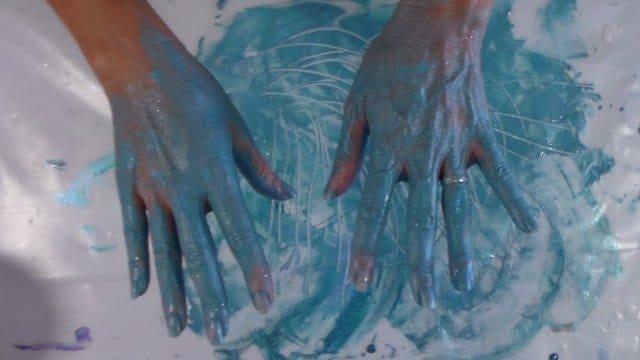
Yikes, do you make one great big mess when you pour? I’ve had paint almost everywhere. On the cat, on the bed, on the floor, all parts of my body, on the door handles, the taps, the table, the walls, and especially my hands and nails – yes, pretty much everywhere can get covered in paint. Clean up can take a long time and after a few days of painting I was finding that under my nails and the skin around my nails – well, it looked like I had just dug myself out of a hole somewhere. Something had to be done!
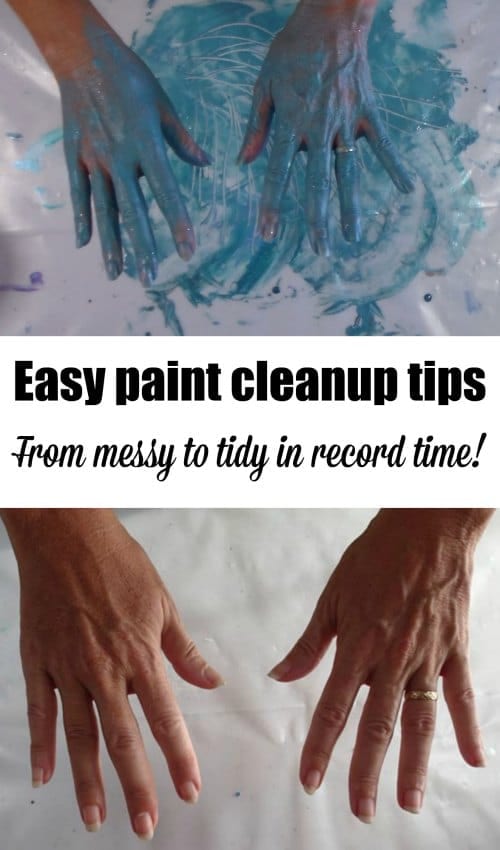
So I’m sharing my little secret with you today. How to make cleaning up a breeze. How to prevent the paint from sticking to you too much in the first place, and then how to remove it easily. I’ll throw in a bonus tip and show you my favorite cleaner for removing dried on paints in seconds.
I recommend you save yourself some money and some clean up time by investing in a good quality plastic to cover your work surface to begin with. That thin flimsy plastic is all static and difficult to work with, thin so it can move about a lot, needs replacing every time because it can’t be cleaned. Instead, invest in a single roll of the thicker plastic and clean it off quickly every time. In all the time I’ve been painting, I’m still only on my second piece, and even then it’s only because I made a hole in the first one with my torch! You’ll save money and time because you won’t need to be constantly changing it and disposing of it.
Get the 4mil weight. It’s so much better than that tissue thin stuff.
Or of course, you can always wear gloves if you want to. I find that the gloves get really slippery when wet with the paint, and I’ve dropped tiles and paintings while wearing them because I just can’t grip the same way. Plus for me, getting messy is part of the whole art experience. There are a huge number of exam gloves on Amazon.
Do you have any cleanup tips you can share? I’m sure we’d all love to know how to save time and money so we have more of each to spend on painting 🙂

After being told in high school that she was so bad at art that she should switch to another subject, Deby didn’t paint again for 35 years. Then a stroke released a new wave of creativity and she began exploring with dot painting, abstract and eventually acrylic pouring, and at last the joy of working with color returned. You don’t need ‘talent’ to be an acrylic pouring artist – just enthusiasm, some basic instruction, and a willingness to try, fail and try again. Paint along with her and learn from her many mistakes, and you’ll soon make great art together.