
If you are new to painting and especially to pouring, when someone first mentions doing a dirty pour you might do a double take. What is a dirty pour? What exactly do they mean by that term? Why is it dirty? Do they mean that the paints are dirty colors, or that there is something ‘dirty’ about it; like they’ll be pouring paint while dressed only in their underwear? Is it some kind of painting fetish that you don’t know about? I admit the first time I heard the term I didn’t know what to think, but it didn’t sound an attractive way to paint at all! Who wants a dirty painting?

In fact, many of the acrylic pours you’ll likely enjoy doing, if not most, are dirty pours. It’s simply a term for mixing more than one paint color in the same container before adding it to the canvas or substrate.
You can also check out this article : Dirty Pouring with a Magic Ingredient!
You can add two, three, four or more pre-mixed colors into your cup or container, and then pour them onto your canvas in a single puddle, in a circle, a square, rows or just randomly across the canvas. The paints mix as they leave the cup blending the colors and creating interesting and sometimes unexpected colors and results. You will usually then tilt the canvas back and forth to move the paint, cover the canvas and the sides and create a composition that you find pleasing. Gravity creates the painting for you!
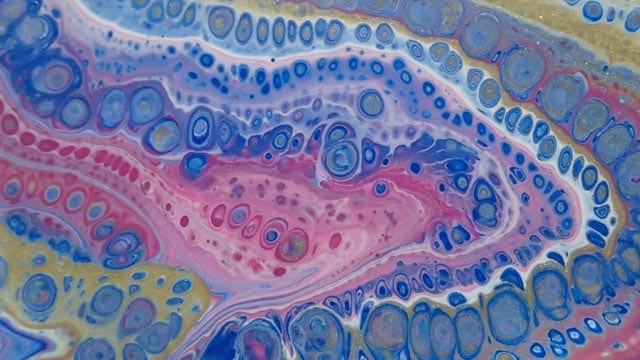
On a larger canvas, several different dirty pour cups might be needed. You can even create ‘double dirty pours’ by using different colors in different cups, such as a blend of blues and greens in one cup, and then reds and yellows in another cup. When poured separately onto the canvas these two different dirty pours can be blended or kept more separate according to the look you are hoping to achieve.
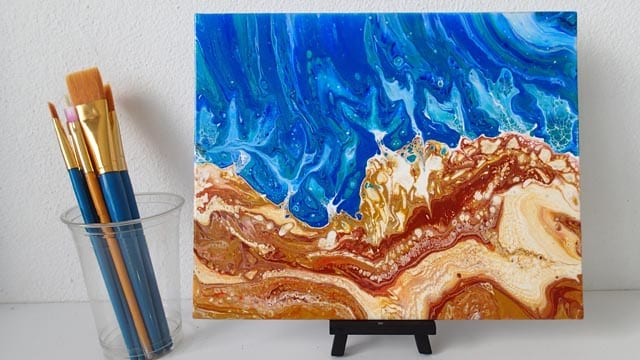
It can be a lot of fun. Nothing dirty about it – unless you choose colors that don’t work together well in which case you could end up with ‘muddy’ colors.
Luckily there are plenty of videos to put you on the right track with this acrylic pouring term. Check out some of my videos below that use a dirty pour:
Dirty pouring with a magic ingredient
Another peacock pour with negative space
Dirty pouring an Ice Planet on a vinyl record
Dirty pouring a record with my own mica paints
Or you can watch this dirty pour on a negative space tutorial now!
If you’re interested in learning more about the dirty pour and other techniques check out our acrylic pouring technique guide.

After being told in high school that she was so bad at art that she should switch to another subject, Deby didn’t paint again for 35 years. Then a stroke released a new wave of creativity and she began exploring with dot painting, abstract and eventually acrylic pouring, and at last the joy of working with color returned. You don’t need ‘talent’ to be an acrylic pouring artist – just enthusiasm, some basic instruction, and a willingness to try, fail and try again. Paint along with her and learn from her many mistakes, and you’ll soon make great art together.